Morocco is one of the world's great places to collect — but at the connoisseur's end, shopping here is a quiet, guided affair rather than a scramble through the souk. With an expert at your side, the hard sell falls away and what remains is sourcing: fine Berber and vintage carpets chosen with a knowledgeable eye, antique tribal silver, bespoke tailoring, and the contemporary design scene that has made Marrakech a destination for collectors. This is a guide to buying beautifully, honestly, and with the practicalities of authenticity and shipping handled for you.
In this guide
- 01Private guided shopping, without the hard sell
- 02Carpets: Berber, vintage and the knowledgeable eye
- 03Antique and tribal jewellery: silver, amber and coral
- 04Babouches, caftans and bespoke tailoring
- 05The Marrakech design scene: concept stores and Sidi Ghanem
- 06Contemporary design, ceramics, tadelakt and thuya wood
- 07Authenticity, fair pricing, export and shipping
- 08Frequently asked
Private guided shopping, without the hard sell
The difference between a frustrating afternoon in the souk and a rewarding one is almost always the person beside you. A private guide who knows the medina — and is trusted by the workshops within it — changes the entire transaction. You are introduced as a guest rather than a mark, shown genuine pieces rather than whatever moves fastest, and freed from the relentless, theatrical hard sell that wears down the unaccompanied visitor. Crucially, a good guide is paid by you, not by commission from the shop, so their loyalty sits where it should.
This is sourcing rather than browsing. Tell your guide in advance what interests you — a tribal carpet for a particular room, antique silver, a caftan made to measure — and the day is built around a handful of the right ateliers rather than a hundred stalls. Haggling still happens, but it becomes a calm, informed conversation about a fair price for a known piece, not a contest you are destined to lose. For the most serious purchases, the better travel designers can bring in a specialist buyer — a textile or antiques expert — for a half-day of true connoisseurship.
- A private guide paid by you, not on commission from the shops — so the advice is honest.
- Introductions to trusted ateliers and dealers, where you are received as a guest rather than a target.
- The day shaped around your interests, not a forced circuit of every stall and a relentless pitch.
- For major pieces, an optional specialist buyer — a carpet or antiques expert — for the day.
Carpets: Berber, vintage and the knowledgeable eye
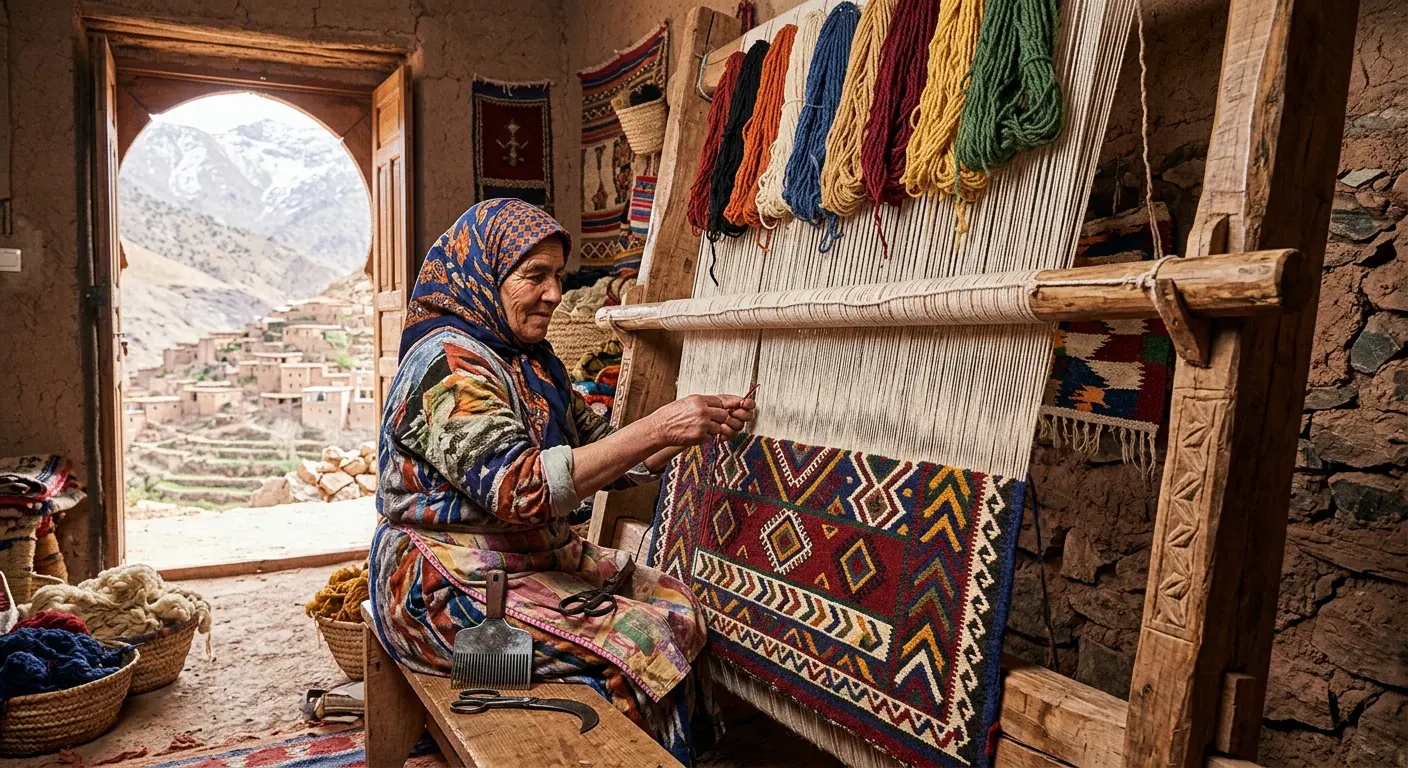
The Moroccan carpet is the great prize, and it rewards knowledge more than any other purchase. Each region and tribe has its own language: the thick, cream, lozenge-patterned Beni Ourain of the Middle Atlas; the flat-woven, brilliantly coloured kilims and the abstract, almost modernist Boucherouite rugs woven from recycled cloth; the fine, dense weaves of Rabat; the bold geometry of the Azilal and the High Atlas. A knowledgeable buyer reads the wool (a hand-spun, lanolin-rich pile versus a slick synthetic), the density of the knots, the natural dyes that mellow with age, and the difference between a genuine vintage piece and a recently distressed one.
Vintage and antique carpets — pieces with decades of life already in them — are where the real character lies, and where an untrained eye is most easily misled. Some wear is honest and adds value; some has been faked. A good guide or specialist will turn a carpet over, check the back for even knotting, test for natural versus chemical dye, and tell you plainly when a 'rare antique' is in fact a fine new weave (which may still be worth buying — only at the right price). Large carpets are precisely where shipping matters, and the established dealers roll, wrap and freight them home reliably; more on that below.
- Beni Ourain — plush, undyed cream wool with dark geometric lines, the modern interiors favourite.
- Kilims and Boucherouite — flat-woven and rag-woven, vivid and graphic, lighter to ship.
- Azilal, Taznakht and High Atlas weaves — bolder colour and pattern, often hand-spun wool.
- Judge wool quality, knot density and natural dyes; honest wear adds value, faked wear does not.
Antique and tribal jewellery: silver, amber and coral
Morocco's old jewellery is among the most beautiful in the Maghreb, and the antique and tribal pieces are objects of real ethnographic interest rather than mere ornaments. The tradition is silver, not gold — Berber and southern Moroccan work in chunky, hand-worked silver set with enamel, niello, and stones. Look for fibulae (the great triangular cloak-pins worn in pairs), heavy hinged bangles, engraved pendants and the elaborate headpieces and necklaces of the south. Old amber — warm, irregular, sometimes strung with coral and silver beads into substantial necklaces — and genuine coral are prized and priced accordingly.
Authenticity here takes a knowing eye. Much of what is sold as 'antique Berber silver' is a blend of older and newer work, and true high-silver content is not guaranteed; genuine old amber is increasingly scarce and frequently imitated in resin or pressed copal. A trusted dealer will be candid about age, silver content and whether amber and coral are genuine, old, or reconstituted — and the honest ones do not mind the questions. Genuine antiquities over a century old are also a customs matter, which a reputable dealer handles with the right paperwork (see the practicalities below).
Babouches, caftans and bespoke tailoring
Morocco's dress is a pleasure to commission as well as to buy. Babouches — the soft leather slippers — run from everyday market pairs to fine hand-stitched examples in supple, vegetable-tanned leather, and a good maker will run up a bespoke pair in your size and colour within a day or two. The caftan and the lighter takchita are the country's great garments: the finest are made to measure from silk, brocade and fine cotton, hand-embroidered and finished with sfifa braid and aâkad knot-buttons, and a tailor can cut one to your measurements over the course of a few fittings.
Bespoke tailoring extends well beyond traditional dress. Marrakech and Fes keep skilled tailors and embroiderers who will make linen shirts, kaftans reimagined as elegant resort wear, and home textiles — embroidered linens, cushion covers, hammam towels — to order. The luxury here is time and measurement: rather than buying off a rail, you choose the cloth, agree the cut, and collect a finished piece (or have it shipped) before you leave. Allow a few days for fittings, and let your guide introduce you to a maker whose finishing you have seen first-hand.
- Bespoke babouches — choose leather and colour, made to your size within a day or two.
- Made-to-measure caftans and takchitas in silk and brocade, hand-embroidered over a few fittings.
- Tailored resort wear, linen shirts and embroidered home textiles cut to order.
- Allow several days for fittings and collection, or arrange shipping of the finished piece.
The Marrakech design scene: concept stores and Sidi Ghanem
Marrakech is no longer only a souk city; it has become one of the more interesting design destinations in the region, and the contemporary scene is a world apart from the medina's stalls. The Gueliz district and the medina both hold concept stores and design boutiques where Moroccan and international designers reinterpret traditional crafts — pared-back ceramics, modern takes on the carpet, leather goods, lighting and homeware with a clear point of view and fixed, transparent prices. For collectors who find the souk's negotiation tiring, these are a calm, curated alternative.
The heart of the design world, though, sits on the city's edge in Sidi Ghanem — the industrial quarter that has filled, over the years, with the studios, showrooms and workshops of Marrakech's designers and makers. It is where many of the ceramics, textiles, tableware and furniture sold in the smart boutiques are actually produced, and a guided morning there — moving between showrooms by car with a driver — is one of the most rewarding things a design-minded traveller can do. Prices are fixed, the makers are often present, and large pieces can be shipped directly. It is best visited with a guide who knows which studios to open and is closed on Sundays.
- Gueliz and medina concept stores — curated, fixed-price design, a calm alternative to haggling.
- Sidi Ghanem — the design district of studios and showrooms on the city's edge, best by car with a guide.
- Makers often on site; direct shipping of furniture and large pieces arranged from the showroom.
- Plan around opening hours — much of Sidi Ghanem is quiet or closed on Sundays.
Contemporary design, ceramics, tadelakt and thuya wood
Beneath the design scene lies the craft itself, and a few materials reward collecting. Moroccan ceramics divide broadly between the cobalt 'Fes blue' — the deep blue-and-white painted earthenware of Fes, hand-decorated in patterns refined over centuries — and the green-glazed and polychrome wares of Safi and Salé, the country's pottery towns. Tadelakt, the polished lime plaster of the hammam and the riad wall, also appears as objects: smooth, waterproof bowls, vessels and small tables in soft, chalky tones, very much in the contemporary Moroccan idiom. Both ceramics and tadelakt pieces are fragile and benefit from professional packing.
From the Atlantic comes thuya — the fragrant, richly grained burl wood of the thuya tree, a craft centred almost entirely on Essaouira. The town's woodworkers turn and inlay it into boxes, bowls, chess sets, mirror frames and small furniture, often combined with lemonwood, mother-of-pearl and silver thread. The grain and scent are unmistakable, and the finest pieces are small sculptures in their own right. Buy thuya in Essaouira where the craft is rooted and the choice is widest, and ask, as ever, about the wood's source — the tree is slow-growing and the craft is best supported through the established cooperatives and workshops.
- Fes blue — cobalt hand-painted earthenware; Safi and Salé for green-glazed and polychrome pottery.
- Tadelakt objects — polished lime-plaster bowls and vessels in soft, contemporary tones.
- Thuya woodwork from Essaouira — fragrant burl-wood boxes and inlay, the town's signature craft.
- Ceramics and tadelakt are fragile — have them professionally packed and shipped.
Authenticity, fair pricing, export and shipping
Buying well in Morocco rests on a few honest practicalities. On authenticity, the watchwords are provenance and a trusted introduction: genuine vintage carpets, old silver and real amber exist in good quantity, but so do convincing reproductions, and the only reliable protection is a knowledgeable guide or specialist and a dealer with a reputation to protect. There is no shame in buying a fine new weave or a recent piece — only in paying an antique price for it. On fair pricing, fixed-price concept stores and Sidi Ghanem showrooms remove the guesswork; in the souk, a calm, informed negotiation with your guide's guidance settles on a price that is fair to both sides.
Two practical matters deserve real attention. First, export: genuine antiquities over roughly a hundred years old require official export documentation from the Moroccan authorities, and any dealer selling true antiques should provide the paperwork without fuss — if they cannot, treat the 'antique' claim with caution. Argan oil and similar liquids over 100 ml must travel in hold luggage. Second, shipping: large carpets, furniture and fragile ceramics are precisely where the established dealers earn their reputation, arranging reliable freight and customs handling to your home — agree the cost, insurance and a realistic timeframe in writing before you pay, and keep all receipts. For everything you carry yourself, the quiet luxury of a private journey is that your driver-guide carries the day's purchases to the car and back to your riad, so you never haul a rolled carpet or a box of ceramics through the medina yourself.
- Provenance over promises — a trusted guide or specialist is the only reliable check on authenticity.
- Genuine antiques over ~100 years old need official export papers; a reputable dealer provides them.
- Agree shipping cost, insurance and timeframe in writing before paying; keep every receipt.
- Let your driver-guide carry the day's purchases — no hauling carpets or ceramics through the souk.
Frequently asked
How does private guided shopping in Morocco work?
A private guide who knows the medina introduces you to trusted ateliers and dealers, where you are received as a guest rather than a target, and the relentless hard sell falls away. Crucially, your guide is paid by you rather than on commission from the shops, so the advice is honest. The day is built around your interests — a particular carpet, antique silver, a bespoke caftan — and for serious purchases a specialist textile or antiques buyer can be brought in for a half-day.
How do I buy a genuine Berber or vintage carpet without being misled?
Knowledge is everything. Learn the regional types — plush cream Beni Ourain, flat-woven kilims, vivid Boucherouite, bold Azilal and High Atlas weaves — and judge the wool, knot density and natural dyes. Honest age adds value; faked distressing does not. The reliable protection is a knowledgeable guide or specialist who will turn the carpet over, check the knotting and dyes, and tell you plainly when a 'rare antique' is in fact a fine new weave — which may still be worth buying, only at the right price.
Is antique Moroccan silver and amber jewellery genuine?
Some is, much is mixed. The tradition is silver rather than gold — fibulae, heavy bangles, engraved pendants and southern headpieces — but true high-silver content is not guaranteed, and 'antique' often blends older and newer work. Genuine old amber is scarce and frequently imitated in resin or copal. A trusted dealer will be candid about age, silver content and whether amber and coral are genuine or reconstituted, and will provide export paperwork for true antiquities over a century old.
Can I have a caftan or babouches made to measure?
Yes. Babouches can be made bespoke in your size and colour within a day or two, and caftans and takchitas are cut to measure from silk and brocade over a few fittings, hand-embroidered and finished with traditional braid and knot-buttons. Tailors in Marrakech and Fes also make linen shirts, resort wear and embroidered home textiles to order. Allow several days for fittings and collection, or arrange to have the finished piece shipped home.
What is Sidi Ghanem, and is it worth visiting?
Sidi Ghanem is the design district on the edge of Marrakech — an industrial quarter filled with the studios, showrooms and workshops of the city's designers and makers, where much of the ceramics, textiles, tableware and furniture sold in the smart boutiques is actually produced. Prices are fixed, makers are often present, and large pieces ship directly. A guided morning there by car is one of the most rewarding things a design-minded traveller can do — but plan around the hours, as much of it is quiet or closed on Sundays.
How do I ship large carpets and furniture home from Morocco?
The established dealers and showrooms arrange this routinely — rolling, wrapping and freighting carpets, furniture and fragile ceramics to your home with customs handling. Agree the cost, insurance and a realistic timeframe in writing before you pay, and keep all receipts. Genuine antiquities over roughly a hundred years old also require official Moroccan export documentation, which a reputable dealer provides. For everything you carry yourself, your driver-guide takes the day's purchases to the car so you never haul them through the medina.
Planning a trip?
Let our team handle the details.
Tell us your dates and style and we'll send a written itinerary and a transparent quote. We confirm by email within 24 hours.
Request an itineraryKeep reading
Culture
Shopping in the Souks: What to Buy, Fair Prices & Tips
Morocco's souks are among the world's great shopping experiences — and at the luxury end, a guided affair: a private guide and trusted artisan introductions turn haggling into curated sourcing. Knowing what to look for in rugs, leather, ceramics, lanterns and argan, and how pieces are shipped and commissioned, lets you collect with confidence rather than guesswork.
Culture
What to Buy in Morocco: Souvenirs & Where to Find Them
The most treasured pieces from Morocco are made by master hands and live with you for years — collectors' rugs, fine Fes leather, hand-painted ceramics, fragrant thuya marquetry, pure argan oil. With a private guide opening the doors of the best ateliers, here is what to acquire and where to find the genuine article.
Planning
Things to Do in Marrakech: The Essential Guide
Marrakech is sensory enchantment — a medieval medina hiding palatial riads, world-class gardens, hammam rituals, candlelit rooftop dinners and a square that becomes, each night, one of the world's great spectacles. With a private guide opening hidden doors, here is where to spend your time in style.