Yes — Morocco is one of the safest and most welcoming countries in North Africa, with a mature, high-end tourism industry. On a privately guided trip, the everyday frictions of petty scams and medina hustle simply fall away, leaving the country's beauty and hospitality.
In this guide
The honest picture
Morocco is politically stable, accustomed to discerning international visitors, and set up for refined travel from the moment you land. Violent crime against tourists is rare. The realistic concerns are the ordinary ones of any busy destination: pickpocketing in crowded souks, overcharging, and persistent (rather than dangerous) approaches from unofficial 'guides'.
The single greatest comfort on a Moroccan journey is a private chauffeur-guide. With a licensed guide and a dedicated driver, you never navigate a lane, negotiate a taxi, or field a false-guide approach — the friction is handled invisibly, and you are free to enjoy the country at your own pace.
Common nuisances and how a guide removes them
A handful of medina classics account for most traveller complaints. None are dangerous, all are avoidable — and a private guide neutralises them entirely.
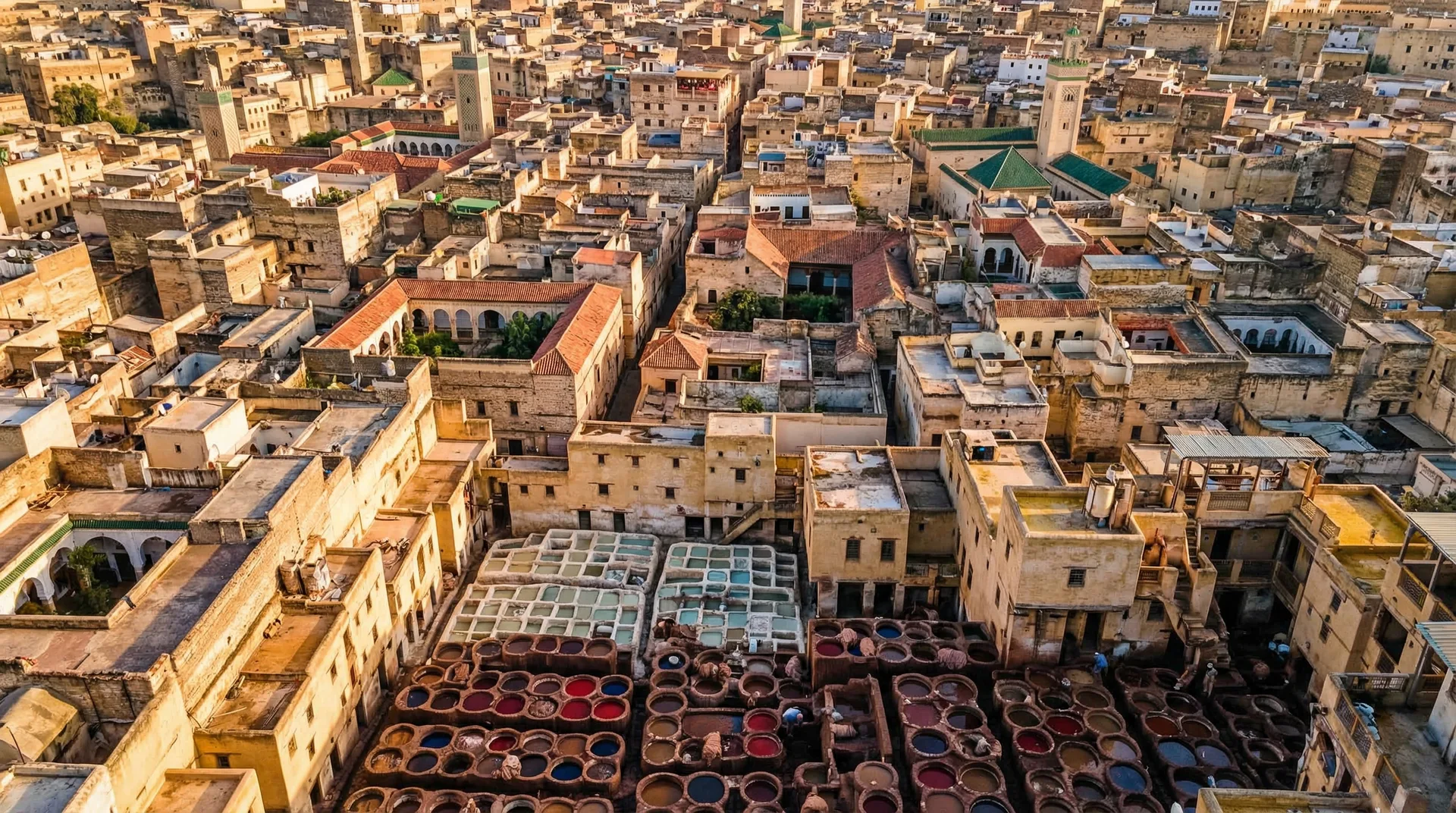
- 'This way is closed' — a stranger steers you toward a shop or tannery for a tip. With a guide beside you, it simply never happens.
- Unofficial guides at city gates and squares — pre-empted by arriving with your own licensed, badged guide.
- Taxi overcharging — irrelevant when transfers are private, flight-tracked and priced in advance.
- Henna and photo 'gifts' in Jemaa el-Fnaa that turn into a charge — your guide manages the encounter gracefully.
Practical wellbeing
Stick to bottled or filtered water for drinking. Dress modestly away from resorts and pools, particularly near religious sites — easily done with elegant linen layers and a scarf. Solo and women travellers visit Morocco in great numbers; a few sensible habits and a discreet support team behind you make the experience seamless. Keep digital copies of your passport, and let your riad or driver handle anything that requires the local language.
Frequently asked
Is Morocco safe for solo female travellers in luxury?
Yes. Many women travel Morocco solo and beautifully every year. Expect some attention rather than danger. Dressing modestly, projecting confidence, and travelling with a private driver and licensed (often female) guide removes nearly all of the friction and makes the trip both safe and genuinely relaxing.
Is it safe to return to my riad at night?
The main, well-lit arteries and squares stay busy and are generally fine; the deep, quiet residential lanes are easy to get lost in. We simply arrange a private car or have a guide walk you the last few minutes to the riad door, so a late dinner never means a moment's worry.
Do I need any vaccinations for Morocco?
No special vaccinations are required for most travellers; routine vaccinations should be up to date. Check current advice from your doctor or a travel clinic before you go, and travel with comprehensive insurance that includes private clinic care.
Planning a trip?
Let a Marrakech atelier handle the details.
Tell us your dates and style and we'll send a written itinerary and a transparent quote within 24 hours.
Request an itineraryKeep reading
Planning
The Best Time to Visit Morocco in Luxury
For a private, riad-led journey, spring (March–May) and autumn (September–November) are the connoisseur's windows — warm days, cool palace-courtyard evenings, and the desert, the Atlas and the imperial cities all showing their finest. The season you choose shapes the entire mood of the trip.
Culture
Morocco Etiquette & Customs
A little cultural grace goes a long way in Morocco, and it is part of what makes a refined trip feel effortless. Dress with quiet modesty, greet warmly, ask before photographing people, use your right hand, and lean into the unhurried rhythm of mint tea and conversation — your guide will smooth every nuance.
Practical
Getting Around Morocco
For a seamless luxury journey, a private chauffeur-guide is the way to travel Morocco — door-to-door from your riad, your own schedule, and a knowledgeable companion at the wheel. The fast Al Boraq train and even helicopter transfers have their place; here is how the pieces fit together.