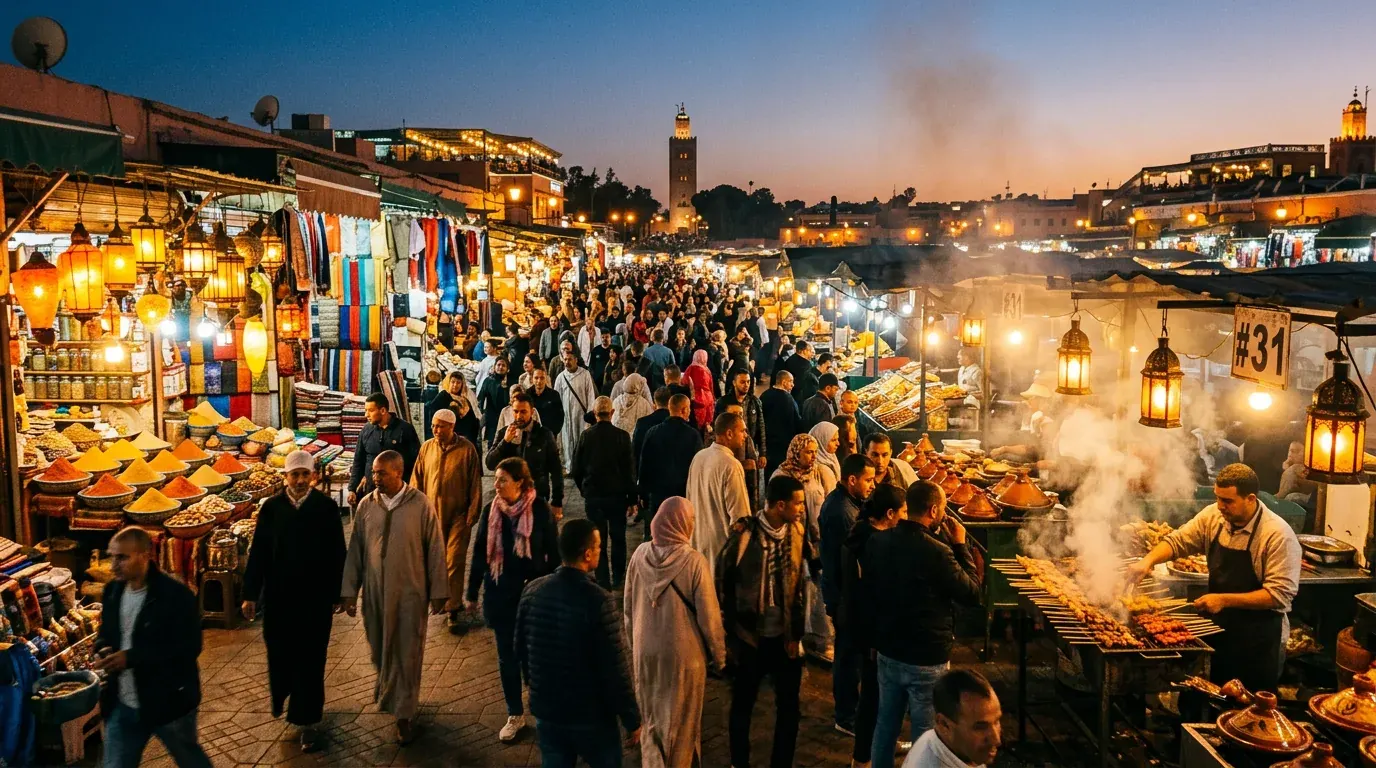
For a private, riad-led journey, spring (March–May) and autumn (September–November) are the connoisseur's windows — warm days, cool palace-courtyard evenings, and the desert, the Atlas and the imperial cities all showing their finest. The season you choose shapes the entire mood of the trip.
In this guide
Season by season, the discreet view
Morocco is a year-round destination, but for a bespoke trip the calendar matters more than most people realise. A single private journey can move from the Atlantic ramparts to a palace riad to a desert camp under the stars — and the season decides whether each chapter feels like a gift or a compromise. We plan around the light, the temperature on a rooftop terrace at dinner, and the quietest moments at the great sights.
- Spring (Mar–May): our favourite season — wildflowers in the Atlas, warm medinas, balmy desert nights perfect for a private camp.
- Summer (Jun–Aug): hot inland (Marrakech and the south can top 40°C); we move clients to breezy Essaouira, the Atlantic coast, or a mountain retreat.
- Autumn (Sep–Nov): a second peak — settled weather, a warm sea for a coastal finish, and golden hour over the dunes at its most cinematic.
- Winter (Dec–Feb): mild, sun-flooded cities and the prime Sahara season; snow on the Atlas peaks and crisp desert nights made for a fire pit and blankets.
Best time by region for a tailored itinerary
For a luxury Sahara night (Erg Chebbi or the remote Erg Chigaga), October to April is the window — high-summer heat makes the dunes punishing and the finest permanent camps quieten down. For a guided High Atlas day or a Toubkal ascent, April to October is ideal, with winter reserved for those with a mountain guide and proper kit.
The Atlantic coast — Essaouira, Oualidia, Agadir — is pleasant most of the year but always breezy; July and August suit a beach-and-spa finish. The imperial cities (Marrakech, Fes, Meknes, Rabat) are most rewarding in spring and autumn, when a long, unhurried medina afternoon ends comfortably on a candlelit roof terrace.
Dates worth designing around
Ramadan shifts roughly eleven days earlier each year (it falls in the late-January-to-February window through the late 2020s) and changes the rhythm of the day; private riads, spa rituals and chauffeur-guided touring continue seamlessly, and the nightly iftar atmosphere can be a privilege to witness. The Gnaoua World Music Festival fills Essaouira in late June, and the Marrakech rose harvest and the film festival draw crowds — for these, the best suites and tables are reserved many months ahead.
Frequently asked
When is the best value time for a luxury Morocco trip?
The quietest, best-value weeks fall just outside the two peaks — June and November — when the finest riads and desert camps offer their most generous availability and rates while the weather stays kind. Deep summer inland and mid-winter outside the holidays are also softer on the wallet, with the season's caveats.
When is it too hot in Morocco?
July and August inland — Marrakech, Fes and the Sahara routinely exceed 38–45°C. If you travel then, we base you on the coast or in the mountains, lean on a plunge-pool riad and air-conditioned chauffeured transfers, and save the desert for a cooler return.
Is December a good time for a romantic Morocco escape?
Beautifully so — sunny, mild city days, few crowds at the great sights, and crisp desert nights that make a private fire-pit dinner under the stars genuinely magical. Pack warm layers: Atlas evenings are cold and the high peaks hold snow.
Planning a trip?
Let our team handle the details.
Tell us your dates and style and we'll send a written itinerary and a transparent quote. We confirm by email within 24 hours.
Request an itineraryKeep reading