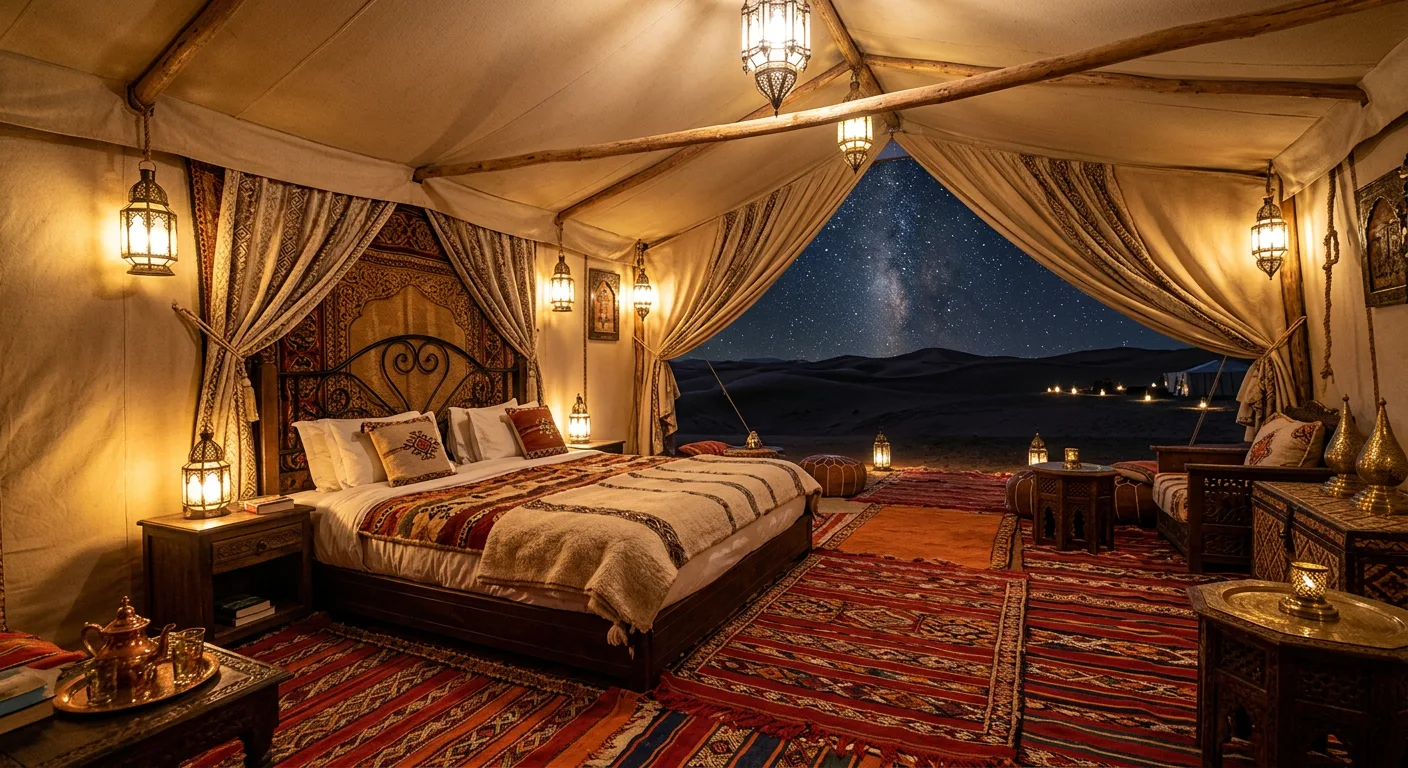
Pack light, elegant and layered. A luxury Morocco journey moves from hot medinas to cool palace courtyards, candlelit rooftop dinners and chilly desert nights in a single trip — so think breathable linen, a few refined evening pieces, beautiful flats for cobblestones, and one genuinely warm layer.
The essentials
These earn their place in any Morocco bag, in any season, whether your nights are spent in a riad suite or a private desert camp.
- Comfortable, well-made flats or loafers — medina cobblestones are uneven; leave delicate heels for the riad terrace.
- Breathable linen and cotton layers, plus one genuinely warm piece (a cashmere wrap earns its place for desert and mountain evenings).
- A relaxed cover-up — shoulders and knees covered for medinas, mosques and villages; an oversized scarf does triple duty as sun, dust and modesty cover.
- One or two elegant evening outfits for fine dining, a rooftop sundowner or a private chef's table.
- Sun hat, polarised sunglasses, SPF 30+, a small day-bag, and a Type C/E plug adaptor (220V).
By experience
For a luxury desert camp, add a warm fleece or packable down layer, a head-torch for moving between tent and fire pit, and slip-on shoes for sand — the camp provides the rest. For a guided Atlas day or a Toubkal ascent, bring proper boots, poles and cold-weather gear; even in spring the summit sits below freezing. For the coast (Essaouira, Oualidia), expect wind year-round and pack a light windproof layer over your swimwear.
What to leave behind
Travel light on toiletries and conspicuous jewellery. The finest riads stock beautiful argan oils and beldi soaps, the souks tempt with scarves and ceramics, and understated is always more elegant in a crowd. Bring a soft, foldable bag (or simply leave room) — between artisan finds and pieces your guide helps you commission, you will return heavier than you left.
Frequently asked
What should women wear for a luxury trip to Morocco?
Loose, breathable pieces that cover shoulders and knees by day — linen trousers, midi dresses, a flowing kaftan — and a more polished outfit or two for evenings of fine dining and rooftop drinks. You needn't cover your hair except inside certain religious sites. A beautiful scarf is the single most versatile thing you can pack.
Do I need warm clothes for a desert camp?
Yes. Desert days are warm to hot, but nights fall to single digits Celsius even in spring and autumn. A warm layer and a wrap turn a private fire-pit dinner under the stars from chilly into deeply romantic — and the best camps supply blankets and hot-water bottles too.
What power adaptor does Morocco use?
Morocco uses the European two-pin Type C/E plugs at 220V. Bring a European adaptor; most phone and laptop chargers handle the voltage automatically. Upscale riads and camps usually provide adaptors on request.
Planning a trip?
Let a Marrakech atelier handle the details.
Tell us your dates and style and we'll send a written itinerary and a transparent quote within 24 hours.
Request an itineraryKeep reading
Planning
The Best Time to Visit Morocco in Luxury
For a private, riad-led journey, spring (March–May) and autumn (September–November) are the connoisseur's windows — warm days, cool palace-courtyard evenings, and the desert, the Atlas and the imperial cities all showing their finest. The season you choose shapes the entire mood of the trip.
Culture
Morocco Etiquette & Customs
A little cultural grace goes a long way in Morocco, and it is part of what makes a refined trip feel effortless. Dress with quiet modesty, greet warmly, ask before photographing people, use your right hand, and lean into the unhurried rhythm of mint tea and conversation — your guide will smooth every nuance.
Planning
Is Morocco Safe to Visit?
Yes — Morocco is one of the safest and most welcoming countries in North Africa, with a mature, high-end tourism industry. On a privately guided trip, the everyday frictions of petty scams and medina hustle simply fall away, leaving the country's beauty and hospitality.