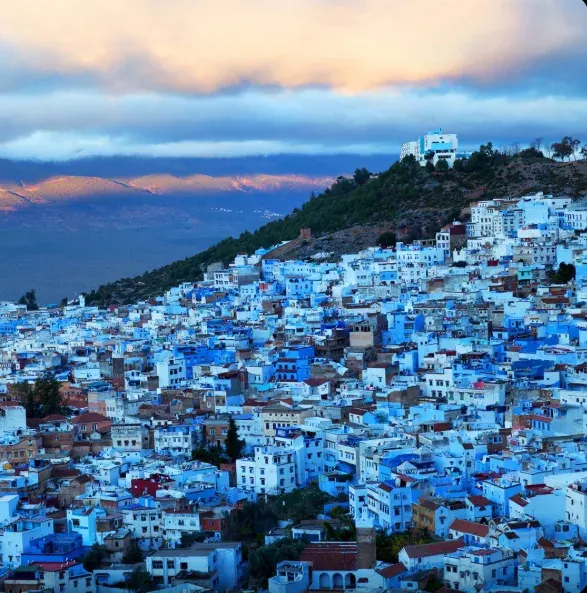
Just an hour or so from the heat and clamour of Marrakech, the High Atlas opens into a cooler, slower world of terraced valleys, walnut groves, snow-touched peaks and Berber villages where time keeps its own pace. Tucked into these landscapes is a small but growing collection of refined mountain lodges — eco-conscious retreats, kasbah-style country houses and boutique hideaways that trade the riad's medina romance for log fires, hammams, spa terraces, farm-to-table dining and walks that begin at the door. They cluster in a handful of valleys: the Ourika, just south of the city; Ouirgane, in the foothills toward Toubkal; the Asni and Imlil valleys beneath North Africa's highest peak; and, deeper still, the remote Aït Bougmez or "Happy Valley." This is our honest guide to the Atlas lodge — what defines the experience, where the valleys lie, the wellness and dining that anchor a stay, the walking and cultural access on the doorstep, when to go, and how to weave a mountain retreat into a wider Morocco journey. The settings and seasons described here reflect the general realities of the region rather than any one property; we match a lodge to your dates, party and pace, and confirm every detail before you commit.
In this guide
- 01What defines an Atlas mountain lodge
- 02The valleys — where the lodges are
- 03Wellness, hammams and the spa terrace
- 04Dining — farm-to-table at altitude
- 05Walking, trekking and Berber-village culture
- 06When to go — seasons in the High Atlas
- 07Combining an Atlas lodge with a wider Morocco journey
- 08Frequently asked
What defines an Atlas mountain lodge
An Atlas lodge is a different proposition from a city riad, and the difference is the whole point. Where a riad turns inward around a courtyard within the medina walls, a mountain lodge turns outward to the landscape — built into a hillside or set above a river valley, its terraces and windows framing terraced fields, walnut and almond groves, and the high peaks beyond. The best of them are small, owner-run or boutique in feel, and built or restored in a vernacular idiom: thick pisé (rammed-earth) walls, kasbah-style towers and flat roofs, local stone and timber, and interiors that lean on Berber rugs, woven textiles and honest craftsmanship rather than gloss. The mood is rustic-refined rather than slick — comfort without pretension.
What you come for is the setting and the slower rhythm it imposes. Days here are shaped by the mountains: a walk before lunch, an afternoon by the fire or on a sun terrace, dinner as the light goes off the peaks. Because the altitude lifts you out of the valley heat, evenings turn cool even in summer, and a log fire or a wood-burning stove is a genuine pleasure for much of the year. Many lodges are deliberately eco-conscious — solar power, kitchen gardens, careful water use and a light footprint on a fragile landscape — and most are intimate enough that the staff know your name within a day. It is a retreat in the truest sense: a place to decompress, breathe cleaner air, and let the pace drop.
- Outward-looking by design — terraces and windows framing valleys, groves and peaks, rather than an inward courtyard.
- Vernacular architecture — rammed-earth (pisé) and stone, kasbah-style forms, Berber rugs and honest, rustic-refined interiors.
- Cool mountain air — log fires and wood stoves are a real pleasure much of the year, even when Marrakech swelters.
- Small, intimate and often eco-conscious — solar power, kitchen gardens, a light footprint, staff who know you by name.
The valleys — where the lodges are
The lodges gather in a handful of valleys, each with its own character and distance from the city. Closest is the Ourika valley, a green river-cut corridor roughly an hour south of Marrakech — easy to reach, popular with day-trippers at its lower end, and lined higher up with quieter retreats among the terraced fields and waterfalls. Westward, toward the Toubkal massif, lies Ouirgane, a gentler, lower-lying area of olive and juniper country set around a reservoir and red-earth hills; it is among the most relaxed of the valleys and suits those who want mountain calm without serious altitude.
Higher and more dramatic are the Asni and Imlil valleys, which climb toward Jbel Toubkal — at 4,167 metres, North Africa's highest peak. Imlil, the last real village on the way up, is the trailhead for Toubkal and the heart of walking country; lodges here sit among walnut groves and stone villages with the high peaks close overhead, and the access to serious mountain walking is unmatched. Deeper into the range, and far less visited, is the Aït Bougmez — the "Happy Valley" — a broad, fertile high valley in the Central High Atlas reached by a longer drive, where flat-roofed villages, irrigated fields and a slow agrarian rhythm feel a world away from Marrakech. It rewards those willing to travel further for genuine remoteness. The valley you choose shapes the trip: Ourika and Ouirgane for an easy cool-air escape close to the city, Asni and Imlil for the high peaks and walking, Aït Bougmez for deep remoteness.
- Ourika valley — green, river-cut, roughly an hour south of Marrakech; the easiest escape, busier at its lower end.
- Ouirgane — gentle, lower-lying olive and juniper country toward Toubkal; relaxed mountain calm without high altitude.
- Asni & Imlil valleys — climbing toward Jbel Toubkal (4,167 m); walnut groves, stone villages and the best walking access.
- Aït Bougmez, the "Happy Valley" — a remote, fertile high valley in the Central Atlas, a longer drive for genuine seclusion.
Wellness, hammams and the spa terrace
Wellness sits at the heart of the Atlas lodge experience, and the mountains lend themselves to it. The combination of clean, thin air, silence, and a setting that asks nothing of you is restorative before any treatment is booked; many guests find the simple act of slowing down in this landscape is the cure. On top of that, most lodges of any standing offer a hammam — the Moroccan steam ritual of warmth, black soap and a vigorous gommage scrub — and a massage, often in a treatment room or on a terrace looking out at the peaks. After a day's walking, a hammam and a fire are a hard combination to better.
Some retreats lean further into wellness as a purpose, hosting yoga and meditation, breathwork or quiet detox-style stays that use the mountain calm as their setting. Others keep it gentle — a spa terrace, a plunge pool or a heated pool, a hammam and a massage woven around walks and long lunches rather than made the whole point. The depth of facilities varies a great deal from lodge to lodge: a small eco-retreat may offer a simple hammam and a masseuse on call, while a larger country house may have a full spa. It is worth confirming exactly what wellness and spa facilities a given property has before you book, rather than assuming a full spa comes as standard with the mountain setting.
- The setting itself is restorative — clean thin air, silence and an unhurried pace before any treatment is booked.
- Most lodges offer a hammam (steam, black soap, a gommage scrub) and massages, often on a terrace facing the peaks.
- Some retreats lean into yoga, meditation, breathwork or quiet wellness stays; others keep it gentle around walks and lunches.
- Facilities vary widely — confirm the spa, hammam and pool offering of a specific property rather than assuming.
Dining — farm-to-table at altitude
Dining in the Atlas is quietly one of its great pleasures, precisely because it is rooted in place. The valleys are fertile — terraced fields, kitchen gardens, walnut and almond groves, olives, herbs and orchards — and the better lodges cook close to the source, with much of what reaches the table grown on site or bought from the surrounding villages. Expect honest, seasonal Moroccan home cooking rather than restaurant theatre: slow-cooked tagines, fresh bread baked daily, mountain honey, vegetables from the garden, and the ceremony of mint tea poured high. Meals are usually taken at the lodge — there is rarely anywhere else to go — and many lodges happily handle dietary needs and children's tastes when asked in advance.
The setting does as much as the food. A long lunch on a terrace with the valley falling away below, or dinner by candlelight and a fire as the cold comes down off the peaks, gives the simplest tagine an occasion. Because lodges are remote and dining is in-house, half-board or full-board arrangements are common and sensible; agree the rhythm and any preferences in advance so the kitchen can shop and plan. As ever, the depth of the dining offer varies — from a single family table at a small retreat to a more structured menu at a country house — so confirm the board basis and what dining looks like at your chosen property before you arrive.
- Farm-to-table by nature — kitchen gardens, village produce, walnut groves, mountain honey and daily-baked bread.
- Honest, seasonal Moroccan home cooking — slow tagines, garden vegetables, mint tea — rather than restaurant theatre.
- Meals are usually in-house with half- or full-board common, as there is rarely anywhere else to dine; agree the rhythm ahead.
- The terrace and the fire make the occasion — a long lunch above the valley, dinner by candlelight as the cold comes down.
Walking, trekking and Berber-village culture
The single greatest gift of a mountain lodge is that the landscape begins at the door. From most properties you can step straight onto a path — a gentle hour's amble through terraced fields and orchards, a half-day walk between Berber villages, or, from the higher valleys, the start of serious trekking toward Toubkal and the high passes. A lodge can almost always arrange a local guide, and a guided walk is the right way to do it: a mountain guide reads the terrain, sets the pace and, crucially, opens doors into village life that a solo walker would pass by. Whatever your level, from a flat valley stroll to a multi-day traverse, the walking is the reason many people come.
Done thoughtfully, the cultural side is as rewarding as the scenery. These are Amazigh (Berber) valleys, and a well-judged stay offers genuine, respectful encounters — tea in a village home, a stop at a women's argan or weaving cooperative, a walk through fields with someone who farms them, a market day in a valley town. The line to hold is between immersion and intrusion: the best lodges and guides arrange these meetings with consent and reciprocity, so that village life is shared rather than staged or gawped at. Approached this way, the human texture of the mountains — the hospitality, the rhythm of agricultural life, the welcome — becomes the lasting memory of the trip rather than a photo opportunity.
- Walks begin at the door — from a gentle valley amble to a half-day village-to-village walk or the trailheads for Toubkal.
- Use a local mountain guide — they read the terrain, set the pace and open village life a solo walker would miss.
- Respectful Berber-village immersion — tea in a home, a weaving or argan cooperative, a market day, arranged with consent.
- The aim is shared encounter, not staged spectacle — the human warmth of the valleys is the lasting memory.
When to go — seasons in the High Atlas
The Atlas is a year-round retreat, but each season has a distinct character and the calendar is worth designing around. Spring (roughly March to May) is many people's favourite: the valleys green up, wildflowers and blossom come to the orchards, the rivers run full with snowmelt, and the walking is at its most beautiful before the high heat. Autumn (September to November) is the other prime window — settled, clear weather, the walnut and almond harvest, and golden light on the terraces, with comfortable days for walking and cool, fire-lit evenings.
Summer (June to August) is precisely when the mountains earn their keep as a cool-air escape: while Marrakech and the south can top 40°C, the altitude keeps the Atlas pleasant by day and cool at night, making a lodge the obvious refuge from the heat. Winter (December to February) is cold and can bring real snow to the higher valleys and peaks — magical and deeply cosy if you want a fireside retreat, with lower valleys like Ourika and Ouirgane staying milder than the heights. Bear in mind that higher access (the road up to Imlil, and trekking toward Toubkal) can be affected by winter snow, and that mountain evenings are cold in every season — warm layers belong in the bag whatever the month. We match the valley and the lodge to the season you choose.
- Spring (Mar–May) — green valleys, wildflowers and blossom, full rivers; arguably the loveliest season for walking.
- Autumn (Sep–Nov) — settled clear weather, the harvest, golden light and fire-lit evenings.
- Summer (Jun–Aug) — the cool-air escape while the lowlands swelter; pleasant days, cool nights at altitude.
- Winter (Dec–Feb) — cosy, fireside and often snowy on the heights; lower valleys stay milder, but check higher access.
Combining an Atlas lodge with a wider Morocco journey
An Atlas lodge rarely makes a whole trip on its own, and it is at its best as one movement in a larger composition. Because the closer valleys sit only an hour to ninety minutes from Marrakech, a mountain stay slots naturally either side of the city: a few days of medina, palaces, souks and rooftop dinners, then a transfer up into the cool of the Atlas to decompress, walk and breathe — or the reverse, settling into the mountains first and descending to the city. The contrast between the two — the intensity of Marrakech and the stillness of the peaks — is one of the most satisfying rhythms a Morocco itinerary can have.
The mountains also pair beautifully with the desert to make a classic three-part journey: imperial city, High Atlas retreat, and Sahara dunes. The Atlas in fact lies on the road south — the great passes such as Tizi n'Tichka carry you over the range toward Ouarzazate and the desert beyond — so a lodge can be a restful pause at the start of a longer southern loop rather than a detour. A common shape is Marrakech, then the Atlas to slow down and walk, then onward over the mountains to the dunes for a night under the stars, before returning. We sequence the stays, transfers and pace so the mountain retreat lands where it does most good — as the calm, cool heart of a richer trip — and confirm drive times and the practicalities of each leg before you commit.
- Pair it with Marrakech — the closer valleys are an hour to ninety minutes away; alternate the city's intensity with mountain calm.
- Build a three-part journey — imperial city, Atlas retreat and Sahara dunes — with the mountains as the restful centre.
- The Atlas lies on the road south (the Tizi n'Tichka pass), so a lodge can be a pause en route to the desert, not a detour.
- Sequence and pace matter — we order the stays, transfers and drive times so the retreat lands where it does most good.
Frequently asked
What is a luxury Atlas mountain lodge, and how does it differ from a riad?
An Atlas lodge is a refined mountain retreat — an eco-conscious lodge, kasbah-style country house or boutique hideaway set in the High Atlas valleys, built in local rammed-earth and stone with Berber interiors. Unlike a city riad, which turns inward around a courtyard within the medina, a lodge turns outward to the landscape, framing terraced valleys and peaks from its terraces. You come for the cool air, log fires, hammams and spa, farm-to-table dining and walks that begin at the door, rather than the medina's bustle. The mood is rustic-refined and intimate rather than slick.
Which valleys have the best mountain lodges?
The lodges cluster in a few valleys, each with its own character. The Ourika valley, about an hour south of Marrakech, is the easiest escape (busier at its lower end). Ouirgane, toward Toubkal, offers gentle, lower-lying calm without serious altitude. The Asni and Imlil valleys climb toward Jbel Toubkal — North Africa's highest peak at 4,167 m — and offer the best walking access. And the remote Aït Bougmez, the "Happy Valley" in the Central High Atlas, rewards those willing to drive further for genuine seclusion. Ourika and Ouirgane suit an easy cool-air escape; Asni and Imlil suit walkers; Aït Bougmez suits seekers of remoteness.
How far is the Atlas from Marrakech?
The closer valleys are very accessible — the Ourika valley and Ouirgane are roughly an hour to ninety minutes' drive from Marrakech, which is why a mountain lodge pairs so naturally with a city stay. The higher Imlil valley is a little further, and the remote Aït Bougmez is a considerably longer drive deeper into the range. Because the closer lodges are so near, the Atlas makes an easy cool-air escape either side of Marrakech. We confirm exact drive times for your chosen lodge before you commit.
What is there to do at an Atlas lodge?
The landscape begins at the door, so walking is central — from a gentle hour through terraced fields and orchards to a half-day walk between Berber villages or, from the higher valleys, serious trekking toward Toubkal, always best done with a local mountain guide. Beyond walking, expect a hammam and spa, often yoga or wellness, long farm-to-table lunches on a terrace, fireside evenings, and respectful Berber-village encounters such as tea in a home, a weaving or argan cooperative, or a market day. Many guests find the slower rhythm and the setting itself the main draw.
When is the best time to visit the Atlas mountains?
Spring (March–May) brings green valleys, wildflowers, blossom and full rivers, and is arguably the loveliest season for walking. Autumn (September–November) offers settled clear weather, the harvest and golden light. Summer (June–August) is the time the mountains earn their keep as a cool-air escape from the 40°C-plus lowlands. Winter (December–February) is cosy and fireside, often with real snow on the heights, though higher access toward Imlil and Toubkal can be affected by snow. Mountain evenings are cold in every season, so pack warm layers whatever the month.
Should I combine an Atlas lodge with the rest of my Morocco trip?
Yes — a lodge is at its best as one movement in a larger journey rather than the whole trip. Because the closer valleys are only an hour or so from Marrakech, a mountain stay slots naturally either side of the city, alternating the medina's intensity with mountain calm. The Atlas also pairs beautifully with the desert: it lies on the road south over the Tizi n'Tichka pass toward Ouarzazate and the Sahara, so a classic three-part journey runs imperial city, Atlas retreat and desert dunes, with the mountains as the restful, cool centre. We sequence the stays, transfers and pace to suit.
Planning a trip?
Let our team handle the details.
Tell us your dates and style and we'll send a written itinerary and a transparent quote. We confirm by email within 24 hours.
Request an itineraryKeep reading
Planning
Trekking the Atlas Mountains: Toubkal, Imlil & Beyond
The High Atlas rises to 4,167 metres at Jbel Toubkal, North Africa's highest peak — and these mountains can be enjoyed in real comfort, from a gentle private walk with a long lunch at a luxury lodge to a guided multi-day traverse or a summit attempt. With the right season, a private mountain guide and the right base, the Atlas rewards every level.
Planning
Where to Stay in Morocco: Riads, Hotels & Desert Camps
Morocco offers one of the world's great luxury accommodation experiences — palatial medina riads with plunge-pool suites and private chefs, landmark palace hotels, kasbah retreats, and Sahara tented camps that rival fine hotels among the dunes. Choosing the right one for each chapter of a journey is where a tailored trip truly shows its hand.
Planning
Luxury Morocco by Season — When to Go for the Trip You Want
Morocco rewards travellers in every season — but the season you choose quietly decides the entire character of the journey. This is our connoisseur's calendar: not a list of temperatures, but a guide to which experiences come into their own, and which luxury choices — a private desert camp, an Atlantic retreat, an Atlas lodge, a plunge-pool riad — best match each window. Climate notes are typical norms rather than guarantees; we plan around the realities of the year you travel.