The souks of Marrakech are not a market in any ordinary sense. They are a living city within a city — a labyrinth of some 3,000 shops and ateliers arranged by craft, much as they have been since the eleventh century. To wander them is half the joy. To wander them with a guide who knows which door hides a master and which a mark-up is how a visit becomes a collection rather than a cautionary tale.
What is most worth collecting?
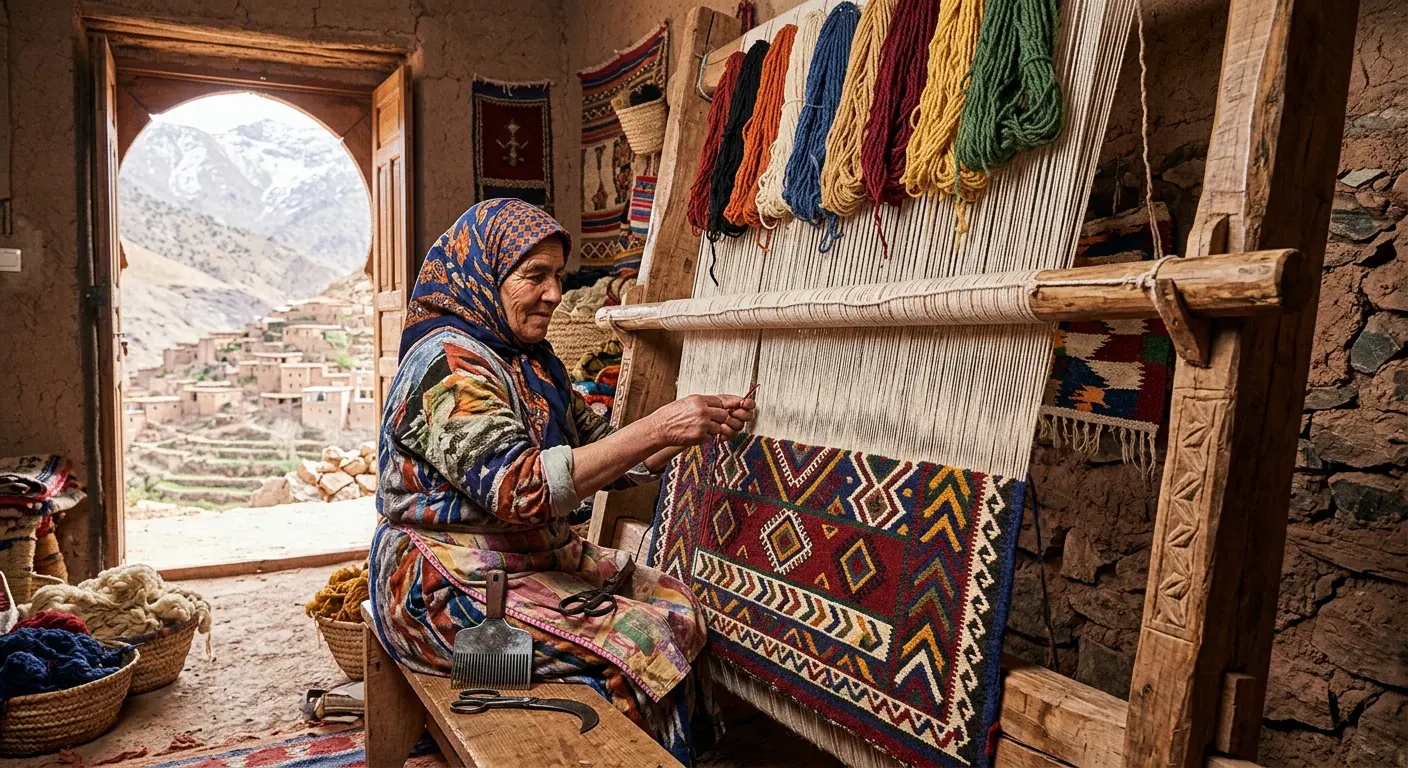
The pieces worth carrying home are those rooted in real craft. Babouches in natural goatskin are a lovely first acquisition — supple, light and made a few streets from where you stand. Berber rugs and kilims woven in the High Atlas have been traded in this medina for centuries; a fine flat-weave runs US$80–300 by size and density. Hand-hammered copper and brass lanterns from the Haddadine quarter make beautiful pieces. Argan oil, cold-pressed from the trees of the Souss, is best bought in amber bottles from a women's cooperative. And for textiles, seek hand-embroidered kaftans, block-printed cottons and resist-dyed scarves from the dyers' quarter.
Approach with care: mass-produced ceramics painted to look Moroccan, synthetic "leather" with a chemical scent, and "antique" Berber jewellery that is really factory white-metal. The surest safeguard is to watch a piece being made before you buy it — and a private guide opens exactly those doors.
Which souk for which craft?
The craft quarters run roughly north to south from Jemaa el-Fna. Souk Semmarine, the main artery, is given to textiles, kaftans and djellabas. Branch into Souk el-Kebir for leather and babouches, then continue to Souk Cherratine, the leatherworkers' quarter, where belts and bespoke bags are still made to order. The souk des teinturiers (dyers' souk) is loveliest in the morning, skeins of fresh-dyed wool hung vivid against the walls — as much a photograph as a purchase. Souk Haddadine rings with copper and ironwork, and the Mellah near the Royal Palace holds the finest Berber silver — old Amazigh fibulas, enamelled brooches and amber beads carried up from the south. Your guide threads them into one graceful loop.
How bargaining works — with grace
The souk runs on a gentle dual-price rhythm: an opening figure and a closing one reached by negotiation. It is no deception but a centuries-old courtesy, and taking part with warmth is expected. A few principles we share with every guest:
- Counter at 40–50% of the first figure, and ease upward slowly.
- Never reveal your budget; let the seller make the early moves.
- Keep it light. Bargaining is convivial, not combative — and if the mood sours, simply move on.
- A genuine walk toward the door is the most graceful lever of all, and almost always draws a better price.
- Once a price is agreed, honour it; reopening it after acceptance is considered ungracious.
- Fixed-price cooperatives, marked as such, dot the medina and serve as useful touchstones for fair value.
Sending your treasures home
The reputable rug and furniture houses — many near the Bahia Palace — keep long ties with international freight agents. A rolled Berber rug to London or New York typically costs US$150–250 and arrives in two to four weeks; flat-packed lanterns and zellige panels ship for US$80–150 a box. Always take a detailed receipt listing the item, dimensions, material and agreed price, and photograph it. Antiques over a century old require an export declaration, which the established houses handle — and which we can oversee for you.
For smaller pieces, DHL and FedEx offices near Gueliz accept packages at the counter. We are glad to coordinate the entire arrangement, so your acquisitions follow you home without a moment's worry.
A word on the tanneries
The Chouara tanneries — most famous in Fès but present in Marrakech too — are where raw hides are soaked, scraped, dyed and dried in the open air. The terraces above are reached through a leather shop, where a purchase is welcome but never required. The finest tannery-adjacent pieces are the simple ones: natural-tan, burgundy or midnight babouches; undyed goatskin purses; clean satchels without fuss. Treat "camel leather" as marketing — the hide is almost always goat or sheep, and your guide will tell you plainly.
The difference a private guide makes
A knowledgeable guide transforms the whole experience. We take our guests off the main artery into the working quarters — where a master sets zellige by hand, or a weaver threads an eight-colour warp on a floor loom. These ateliers sell direct, at fair prices, and you leave understanding exactly what you have collected. Our private medina guides are independent, taking no commission from any shop — so they lead you to where the quality lies, never the margin. See our Marrakech destination guide for the broader picture, or browse our private tours that include a curated souk morning.
Frequently asked
What is most worth bringing home from the Marrakech souks?
The pieces tied to true craft: supple leather (babouches, bags, belts), Berber rugs and kilims, cold-pressed argan oil and rose water, hand-hammered copper and brass, zellige, hand-embroidered kaftans, and saffron from the Dades Valley. All are made in Morocco and carry genuine artisan value — and our guide can introduce the makers whose work merits a place in your home.
Is bargaining expected in the Marrakech medina?
Yes — the first figure named is rarely the last. A calm, good-humoured counter of 40–60% of the opening price is the norm, and walking away is entirely acceptable, often drawing a better offer. With a private guide beside you, the whole exchange becomes a pleasure, and a fair price is quietly assured.
How do you tell genuine quality in the souks?
Buy where you can watch the craft made. For a rug, ask to see the knot count and feel the weight; for leather, true goatskin carries a faint natural scent that synthetics lack; cosmetic argan oil should read golden-green, not pale. Our guides know the ateliers where provenance is real — so you collect heirlooms rather than souvenirs.
Can large purchases be shipped home?
Yes. The reputable carpet and furniture houses work with international freight agents — a rolled rug to Europe or North America typically runs US$150–400, arriving in two to four weeks. Always take a receipt listing the item, dimensions and agreed price. We can oversee the arrangement on your behalf, so your treasures follow you home with no fuss.
Which souks are best for which crafts?
The souk des teinturiers (dyers' souk) for dyed wool and yarn; Souk Cherratine for leatherwork; Souk Haddadine for copper and iron lanterns; Souk Semmarine for textiles; and the Mellah silver market near the Royal Palace for Berber jewellery. Your guide threads them into a single graceful loop rather than a maze.
Do the souks accept credit cards?
Most small stalls are cash-only, while larger shops and fixed-price cooperatives increasingly take Visa and Mastercard, sometimes with a small surcharge. Carry Moroccan dirhams for the stalls; ATMs sit around Jemaa el-Fna. For larger acquisitions, we can help arrange secure payment with the established houses.
Collect with confidence
Let a commission-free private guide lead the way.
Our private medina guides bring you to the craftspeople, not the tourist shops — and never take a cut of what you collect, so every piece is chosen for its quality alone.
Request an itinerary