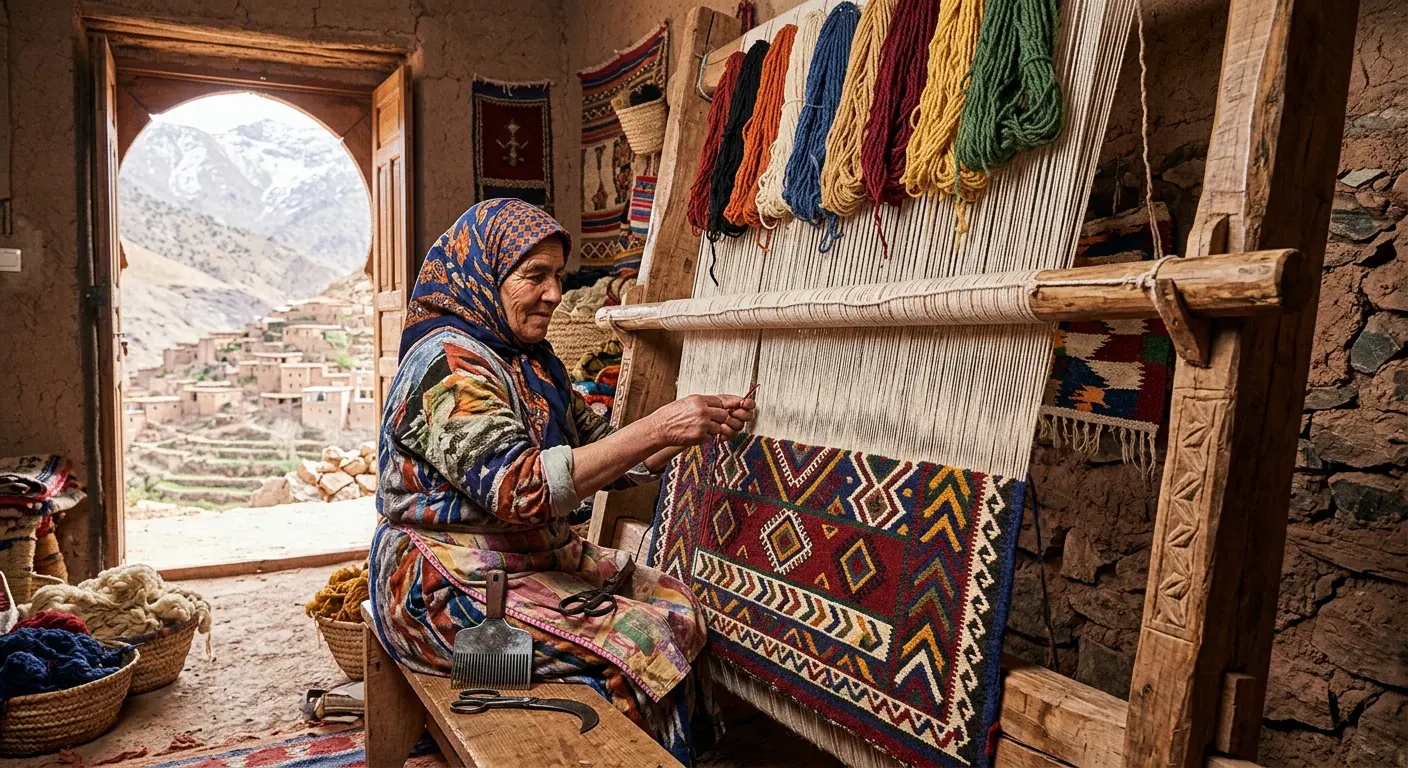
Morocco spans climate zones from Mediterranean coast to high mountain to Saharan erg — sometimes within a single three-day journey. Packing well means thinking in layers rather than outfits, and in pieces that travel light and look effortless. Here is what we suggest across the year, by region and season — and your concierge tailors it to your exact itinerary.
Which season are you travelling in?
Morocco has four distinct travel seasons that drive packing choices more than anything else:
- Spring (March–May): The best all-round season. Warm days (20–28°C in Marrakech), cool evenings, wildflowers in the Atlas. Pack light layers and a light jacket for mountain excursions.
- Summer (June–August): Marrakech and the interior can reach 40°C. Pack light, breathable fabrics — linen and cotton are essential. The coast (Essaouira, Agadir) is a welcome 25°C with Atlantic breezes. High Atlas trekking is excellent; pack sunscreen with SPF 50+ and a wide-brimmed hat.
- Autumn (September–November): Second-best season. Crowds thin, temperatures settle. Pack as for spring; add a mid-layer fleece from October.
- Winter (December–February): Marrakech days are pleasant (15–20°C) but nights are genuinely cold (5–10°C). The Atlas gets snow from December. Pack as you would for a cool European autumn, plus a warm layer for evenings and mountain travel.
What to wear in the medinas
No rule governs visitor dress, but a modest, graceful wardrobe elevates the whole experience. In practice, cover shoulders and knees in the medinas, souks and near mosques — equally for everyone. A light linen shirt over a vest, or soft tailored trousers rather than shorts, is all it takes, and looks the part on a riad terrace too.
For shoes, choose comfortable, closed-toe styles with a good sole — the lanes are uneven, often damp in the cooler months, and busy with scooters. A refined trainer or soft loafer serves beautifully.
What to pack for High Atlas trekking
Toubkal (4,167 m) is the highest peak in North Africa and can be summited year-round with the right gear. For any multi-day Atlas trek, the essentials are:
- Layering system: base layer, mid-layer fleece, windproof outer shell
- Warm hat and gloves (above 2,500 m even in summer, nights are cold)
- Trekking boots with ankle support and a worn-in sole
- Trekking poles (reduce knee strain on descents)
- High-SPF sunscreen and UV-protection sunglasses (altitude intensifies UV)
- A 2-litre water bladder or bottles; purification tablets as backup
- A small first-aid kit including blister plasters and ibuprofen
What to pack for a Sahara night
A night at the Erg Chebbi dunes near Merzouga, or Erg Chigaga near M'Hamid, is among Morocco's most magical experiences — and rewards a little preparation, even though the luxury camps we choose provide so much for you:
- Layers: a warm fleece and even a down jacket for winter nights — temperatures can approach 0°C from November to February.
- Scarf or shemagh: doubles as sun protection and keeps sand out of your face during breezy camel rides.
- Closed shoes for the evening campfire — sand cools fast after sunset
- Headtorch with fresh batteries
- Dust-proof bags or zip-lock bags for your phone, camera and passport
- Lip balm and nasal saline spray — desert air is extremely dry
- Power bank; camps may not have reliable electricity for charging
What to collect in Morocco rather than pack
Some pieces are lovelier bought there — finer in quality and a keepsake of the journey. A cotton or silk djellaba is a versatile, elegant layer for cool evenings and perfectly at home anywhere. Argan-based skincare from the pharmacies is exquisite and a fraction of European prices, and hand-made leather babouches are a joy for medina wear. Your guide can introduce the makers whose work is worth carrying home.
Documents, money and tech essentials
- Passport valid for at least six months beyond your travel dates
- Travel insurance documents (print a copy and save a PDF offline in case of no signal)
- A debit card with low foreign transaction fees (Wise, Revolut and Charles Schwab all work well in Moroccan ATMs)
- A working float of MAD — plan to withdraw the equivalent of US$100–150 on arrival
- A universal power adapter (Morocco uses European type C/E plugs, 220V)
- A local SIM or an international data plan — street navigation is invaluable
- Downloaded offline maps (Maps.me or Google Maps offline) for medinas, where GPS can struggle inside tight alleys
For destination-specific advice or a bespoke pre-trip document tailored to your journey, see our Morocco travel guides or explore our private journeys.
Frequently asked
Can I wear shorts and vest tops in Morocco?
Around hotel pools and at the coast (Essaouira, Agadir, Taghazout), of course. In the medinas, near mosques and in rural areas, covering shoulders and knees is graceful and draws far less attention — a mark of respect rather than any rule. A light linen layer takes up almost no space and looks effortlessly elegant.
What shoes are best for the Marrakech medina?
Comfortable, closed-toe walking shoes with a modest sole. The stone lanes turn slick when damp and the paving is uneven, so leave the flip-flops behind. A refined trainer or a soft leather loafer is ideal — and a slip-on style eases entry where shoes are removed.
Do I need cash, or can I use cards in Morocco?
Bring a little of both. Fine hotels, restaurants and riads take Visa and Mastercard; small shops, stalls and taxis are cash-only. ATMs dispense dirhams reliably in the cities, and we advise a working float — around US$100–150 in MAD for the first days. Your concierge can also help with secure payment for larger acquisitions.
How much luggage should I bring to Morocco?
Less than you imagine. Laundry is easy — the riads we choose offer same- or next-day service, and linen and cotton dry overnight. A medium case is ample for two weeks, and our porters carry it through the medina lanes for you. Travelling light only makes narrow riad staircases and desert transfers more graceful.
What should I pack for a Sahara desert night?
Layers are everything — the Sahara can reach 40°C by day and fall to 10°C after midnight between October and March. A warm fleece or down layer, a hat and closed shoes for the evening are essential, along with a headtorch, lip balm, high-SPF sunscreen and a dust bag for phone and camera. The luxury camps we choose provide duvets, heaters and a hot drink waiting in the tent.
Is there anything I should not pack for Morocco?
Alcohol in quantities suggesting commercial import may be held at customs (personal amounts pass easily). Drones require a Moroccan civil aviation permit and are otherwise confiscated at airports. Prescription medication is fine — carry it in its original box, with a doctor's letter for anything that might appear controlled. We flag anything itinerary-specific in your pre-trip briefing.
One less thing to consider
Every guest receives a bespoke pre-trip briefing.
It includes a packing list tailored to your exact journey, the forecast for your travel window and our current on-the-ground notes — so you arrive perfectly prepared, with nothing left to chance.
Request an itinerary