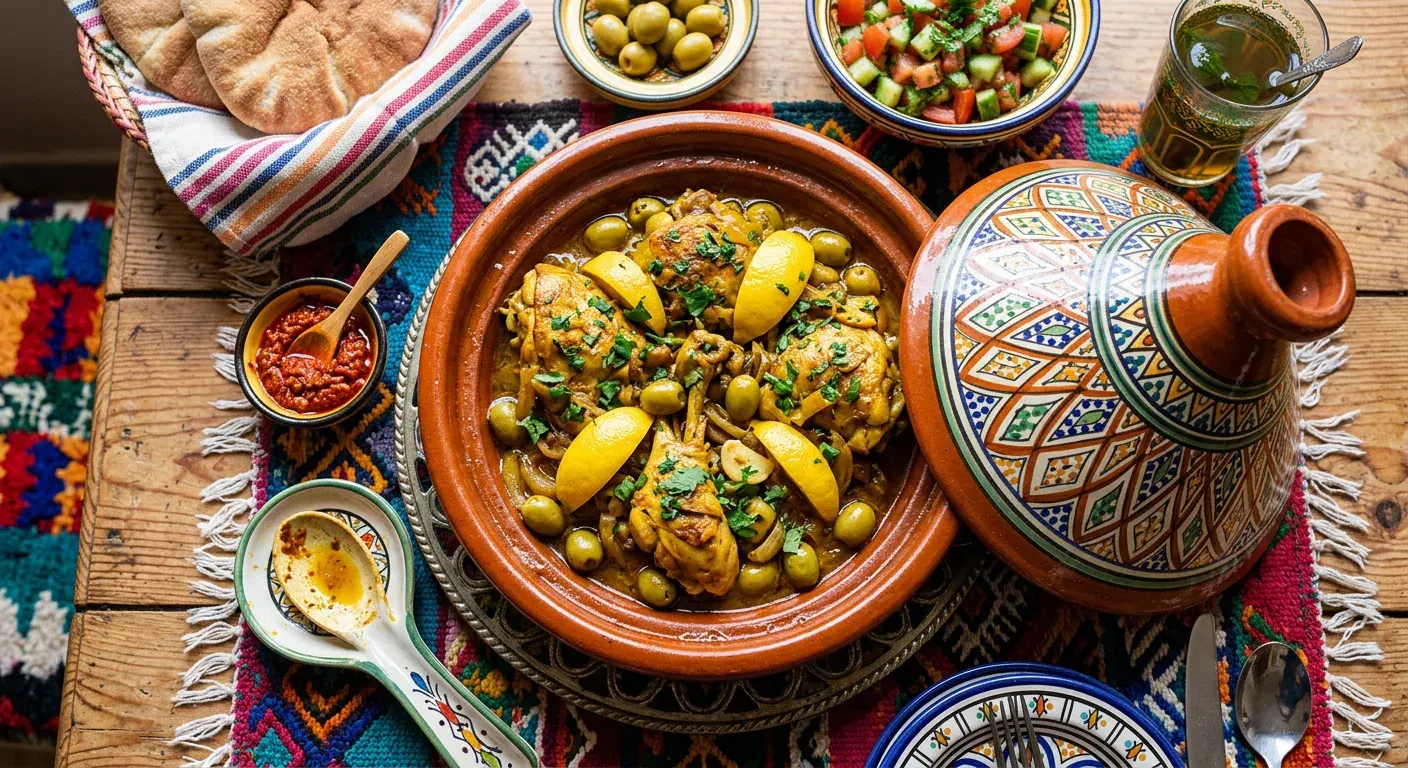
Morocco rewards the appetite as richly as the eye. The finest tables here are rarely the loudest — they are a private chef's hands in your own riad kitchen, a feast laid beneath the stars in the deep desert, a candlelit roof above the medina rooftops. This is a guide to dining beautifully across the kingdom, from the traditional diffa to a modern tasting menu, planned with the same discretion as the rest of your journey.
In this guide
The private riad chef and the exclusive table
The single most luxurious way to eat in Morocco is also the most intimate: a private chef cooking for you alone, in the courtyard of your own riad. The better houses keep a dada — a traditional cook whose repertoire has been honed over decades — or can bring in a chef for the evening. The meal unfolds slowly across a sequence of cooked salads, a centrepiece tagine or pastilla, and a procession of pastries and tea, served on the terrace or beside the courtyard pool with no other guests and no fixed hour.
Beyond the riad, the country's palace hotels and garden restaurants can arrange exclusive use of a salon, a private dining room, or a table set apart in a citrus grove. The point of luxury dining in Morocco is not a long wine list or a famous name; it is privacy, place, and a kitchen given the time to do things properly.
- A private chef or resident dada cooking a multi-course Moroccan dinner in your riad courtyard.
- Exclusive-use dining — a private salon, a garden table, or a rooftop reserved for your party alone.
- A meal built around your tastes: lighter and vegetable-led, or a full traditional feast, decided in advance.
The diffa and the mechoui — feasting in the old way
The diffa is the traditional Moroccan feast of welcome — a generous, ceremonial sequence of dishes reserved for honoured guests and celebrations. A full diffa might open with a sweet-savoury pastilla, move through one or more tagines and a mountain of saffron couscous, and finish with seasonal fruit, pastries and mint tea. It is hospitality expressed as abundance, and arranging one in a private riad or a desert camp turns a dinner into an occasion.
At its heart sits the mechoui — a whole lamb, rubbed with butter and cumin and slow-roasted until it pulls apart at the touch of a hand. Cooked over many hours in a pit oven or on a spit, the mechoui is a showpiece that must be ordered in advance, and watching it carved at the table is one of the great theatrical pleasures of Moroccan dining.
Dinner under the stars in the deep desert
There is no setting in Morocco quite like a table laid in the dunes. At the finest permanent camps in Erg Chebbi and the remote Erg Chigaga, dinner is served on linen by lantern and firelight, the Sahara silent in every direction and the sky thick with stars. The food is honest and beautifully done — a soup to begin, a slow tagine carried from the camp kitchen, pastries and tea by the fire — and the absence of light pollution makes the meal feel suspended outside time.
For a celebration, a camp can set a single private table apart from the others on a dune crest, with a fire pit, blankets for the cool night air, and Gnaoua or Amazigh musicians playing softly nearby. It is the rare dinner that needs nothing added to it.
Rooftops, gardens and market-to-table
Above the medinas of Marrakech, Fes and Tangier, the rooftop dinner is a quiet art — a candlelit terrace with the call to prayer drifting across the city, the Atlas snowline pink at dusk behind Marrakech, or the lights of two continents across the strait from a Tangier roof. The better riads and hotels lay these tables for their guests alone, and a sunset aperitif before dinner makes the most of the hour.
For travellers who like to understand a cuisine from the ground up, a market-to-table experience pairs you with a private chef for a guided walk through the souk — choosing herbs, olives, preserved lemons, spices weighed out by the gram, and the day's fish or meat — before returning to cook and dine together. It is part lesson, part feast, and one of the most rewarding half-days a food-minded traveller can spend.
- Rooftop dinners with medina, Atlas or strait-of-Gibraltar views, set privately for your party.
- Garden restaurants and palace courtyards for a long, unhurried lunch in the shade.
- Market-to-table mornings: a guided souk walk with a private chef, then cooking and dining together.
Moroccan wine country and the rituals of tea
Morocco is a genuine wine-producing country, and the heart of it lies around Meknes — the Guerrouane and Zaër appellations on the plains below the imperial city are the kingdom's principal wine region, producing the structured reds and rosés that pair so naturally with a rich tagine. The better riads, palace hotels and licensed restaurants carry thoughtful lists, and a sommelier-led pairing or a discreet visit to wine country can be woven into an itinerary for those who are curious. Alcohol is served gracefully in these settings rather than everywhere, and never imposed.
At the other end of the day sits the gentler ritual: mint tea, poured from height onto fresh mint and sugar, and the pastry table — almond-stuffed gazelle horns, briouats, sellou, dates filled with marzipan. In a fine house this becomes a small ceremony of its own, served on a chased silver tray on a shaded banquette, and it is every bit as much a part of dining beautifully here as the feast that precedes it.
Morocco's first Michelin Guide
Morocco's culinary standing took a notable step forward when the country received its first Michelin Guide, launched in 2024 — a milestone that placed Moroccan kitchens on the same international map as the world's recognised dining destinations. The guide drew attention to a spread of addresses across the country, with a number of Marrakech, Rabat and Tangier tables recognised, spanning both refined Moroccan cooking and the international kitchens that have made the cities a magnet for serious cooks.
For the discerning traveller, the guide is a useful signal rather than a script. The most memorable meal of a Moroccan journey is just as likely to be a private chef's diffa in your riad, a tagine carried across the dunes, or a long garden lunch — and a good travel designer will balance a marquee reservation against these quieter, more personal pleasures.
Frequently asked
How do I arrange a private chef in my riad in Morocco?
It is one of the simplest luxuries to organise. Many fine riads keep a resident dada or cook, and those that do not can bring in a private chef for the evening. You agree a menu in advance — a full traditional diffa, a lighter vegetable-led dinner, or a particular dish such as pastilla or mechoui — and the meal is served privately in your courtyard, on the terrace or beside the pool, at whatever hour suits you. Special diets are accommodated with ease.
What is a diffa?
A diffa is the traditional Moroccan feast of welcome — a ceremonial, multi-course sequence reserved for honoured guests and celebrations. It typically moves from pastilla through one or more tagines and a great dish of couscous to fruit, pastries and mint tea. Arranged in a private riad or a desert camp, it turns dinner into a genuine occasion, and dishes such as a whole-roasted mechoui lamb are ordered in advance.
Does Morocco have a Michelin Guide?
Yes. Morocco received its first Michelin Guide, launched in 2024 — the country's debut on the international Michelin map. A number of addresses across Marrakech, Rabat and Tangier were recognised, spanning refined Moroccan cooking and the cities' international kitchens. We treat it as a helpful signal rather than the whole story, balancing a notable reservation against private chefs' tables and desert dining.
Can you drink wine in Morocco, and is there a wine region?
Yes. Morocco produces respectable wine, and its principal wine region lies around Meknes — the Guerrouane and Zaër appellations whose structured reds and rosés pair beautifully with rich tagines. Luxury riads, palace hotels and licensed restaurants serve wine gladly and often keep thoughtful lists; outside these settings it is served more discreetly. A pairing dinner or a quiet visit to wine country can be built into an itinerary.
What is the most memorable luxury dining experience in Morocco?
It depends on the traveller, but the experiences that stay with our clients longest are rarely the most formal: a private chef's diffa in a candlelit riad courtyard, a table laid in the silence of the dunes under a full sky of stars, a rooftop dinner above the medina at sunset, or a market-to-table morning that ends in cooking and feasting together. The setting and the privacy matter as much as the food.
Planning a trip?
Let our team handle the details.
Tell us your dates and style and we'll send a written itinerary and a transparent quote. We confirm by email within 24 hours.
Request an itineraryKeep reading
Culture
Moroccan Food & Drink
Moroccan cuisine is one of the world's great food cultures — and one of its most quietly luxurious. From a private chef's table on a candlelit riad terrace to a tasting menu reimagining the tagine, the country rewards the discerning palate at every turn, all woven through with the ritual of sweet mint tea.
Culture
Moroccan Cooking Classes: What to Expect & Where to Book
A private Moroccan cooking lesson is one of the most intimate ways to connect with the culture — a guided souk visit for saffron and preserved lemons, then slow-cooking a tagine alongside a chef in your riad courtyard or a palace kitchen. This guide covers what you will learn, how to arrange a private or exclusive experience, and what it actually involves.
Planning
The Best Time to Visit Morocco in Luxury
For a private, riad-led journey, spring (March–May) and autumn (September–November) are the connoisseur's windows — warm days, cool palace-courtyard evenings, and the desert, the Atlas and the imperial cities all showing their finest. The season you choose shapes the entire mood of the trip.