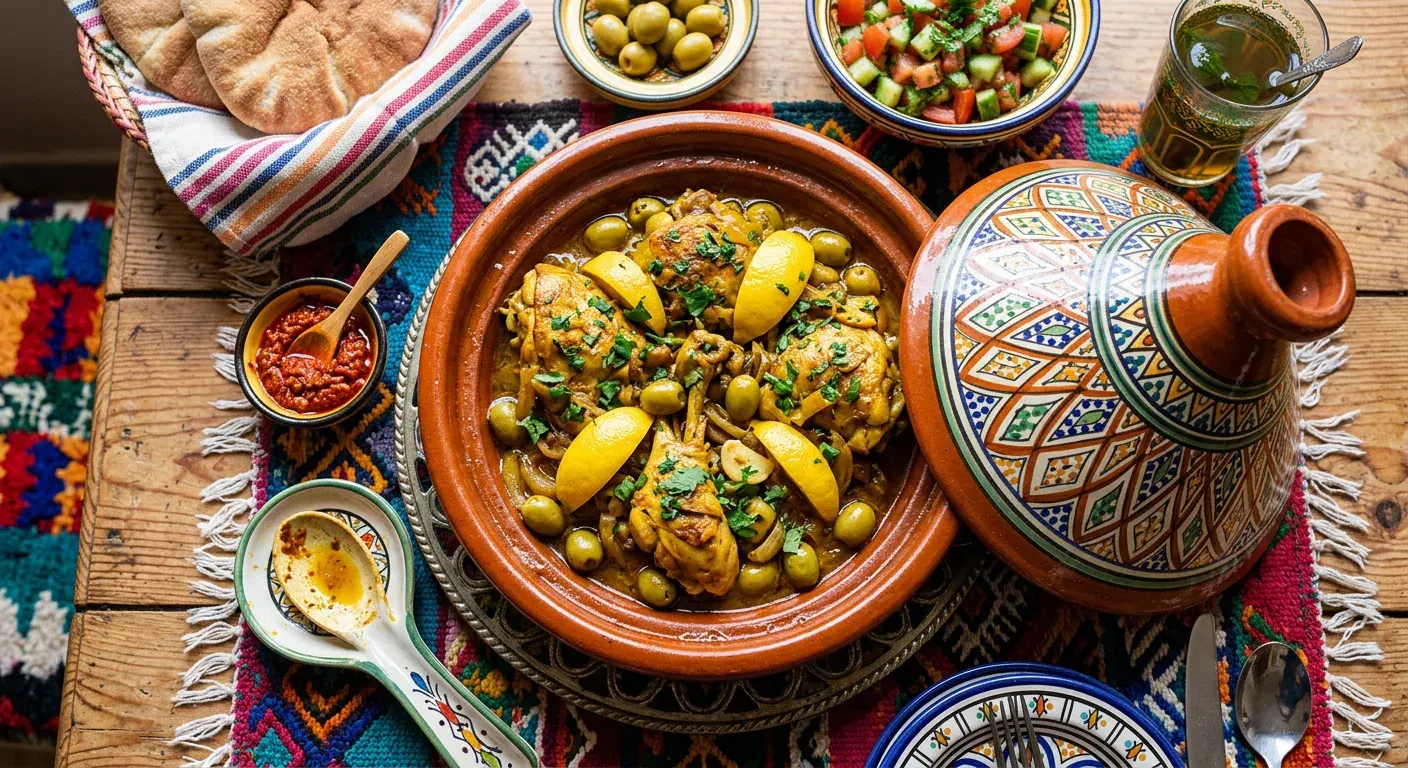
Moroccan cuisine is one of the world's great food cultures — and one of its most quietly luxurious. From a private chef's table on a candlelit riad terrace to a tasting menu reimagining the tagine, the country rewards the discerning palate at every turn, all woven through with the ritual of sweet mint tea.
In this guide
Dishes to seek out
Beyond the famous tagine and couscous, a handful of specialities — often best experienced in the hands of a fine riad kitchen or a private chef — reward the curious diner.
- Tagine — slow-cooked to perfection (lamb with prunes and almonds, chicken with preserved lemon and olives, or a refined seafood version on the coast).
- Couscous — traditionally the Friday family meal, hand-rolled and steamed with seven vegetables; a labour of love at the better tables.
- Pastilla — the celebrated sweet-savoury pie of pigeon or chicken under gossamer warqa pastry and icing sugar, a centrepiece of any special dinner.
- Mechoui — whole slow-roasted lamb, meltingly tender, a showpiece dish best arranged in advance.
- Coastal fine dining — grilled langoustine and line-caught fish in Essaouira and Oualidia, served metres from the Atlantic.
The tea ritual
Mint tea — green tea, fresh mint and sugar, poured theatrically from height — is the thread running through Moroccan hospitality, and in a fine riad it becomes a small ceremony, served on a chased silver tray with pastries on a shaded courtyard banquette. Offered everywhere from souk stall to palace salon, accepting it graciously is part of the pleasure.
Dining well, and a word on wine
Morocco is a wine-producing country, and the better riads, palace hotels and licensed restaurants carry thoughtful lists — the reds of Meknes and the Guerrouane and Zaër appellations pair beautifully with rich tagines. Alcohol is served discreetly in these settings rather than everywhere. For the most memorable meals, arrange a private chef to cook in your riad, a chef's table, or a long lunch at one of the country's garden restaurants. Choose bottled water, and rest assured that vegetarians and special diets are graciously accommodated at this level of service.
Frequently asked
What is the national dish of Morocco?
Couscous and tagine are the two contenders. Couscous is the traditional Friday family meal; tagine — the slow-cooked stew named for its conical earthenware pot — is eaten across the country in countless variations, from rustic to refined, and is a highlight of any private dining experience.
Can you drink alcohol in Morocco?
Yes, discreetly. Morocco produces respectable wine, and luxury riads, palace hotels, licensed restaurants and rooftop bars serve it gladly. Outside these settings, especially in conservative areas and during Ramadan, it is not the norm — your riad or guide will steer you effortlessly.
Can fine restaurants and riads cater to special diets?
Absolutely. At the luxury end, kitchens routinely accommodate vegetarian, vegan, gluten-free and other requirements with grace — Moroccan cuisine's abundance of vegetables, pulses, salads and fruit makes it one of the easiest cuisines to tailor. Simply note your preferences when booking.
Planning a trip?
Let our team handle the details.
Tell us your dates and style and we'll send a written itinerary and a transparent quote. We confirm by email within 24 hours.
Request an itineraryKeep reading
Culture
Morocco Etiquette & Customs
A little cultural grace goes a long way in Morocco, and it is part of what makes a refined trip feel effortless. Dress with quiet modesty, greet warmly, ask before photographing people, use your right hand, and lean into the unhurried rhythm of mint tea and conversation — your guide will smooth every nuance.
Planning
The Best Time to Visit Morocco in Luxury
For a private, riad-led journey, spring (March–May) and autumn (September–November) are the connoisseur's windows — warm days, cool palace-courtyard evenings, and the desert, the Atlas and the imperial cities all showing their finest. The season you choose shapes the entire mood of the trip.