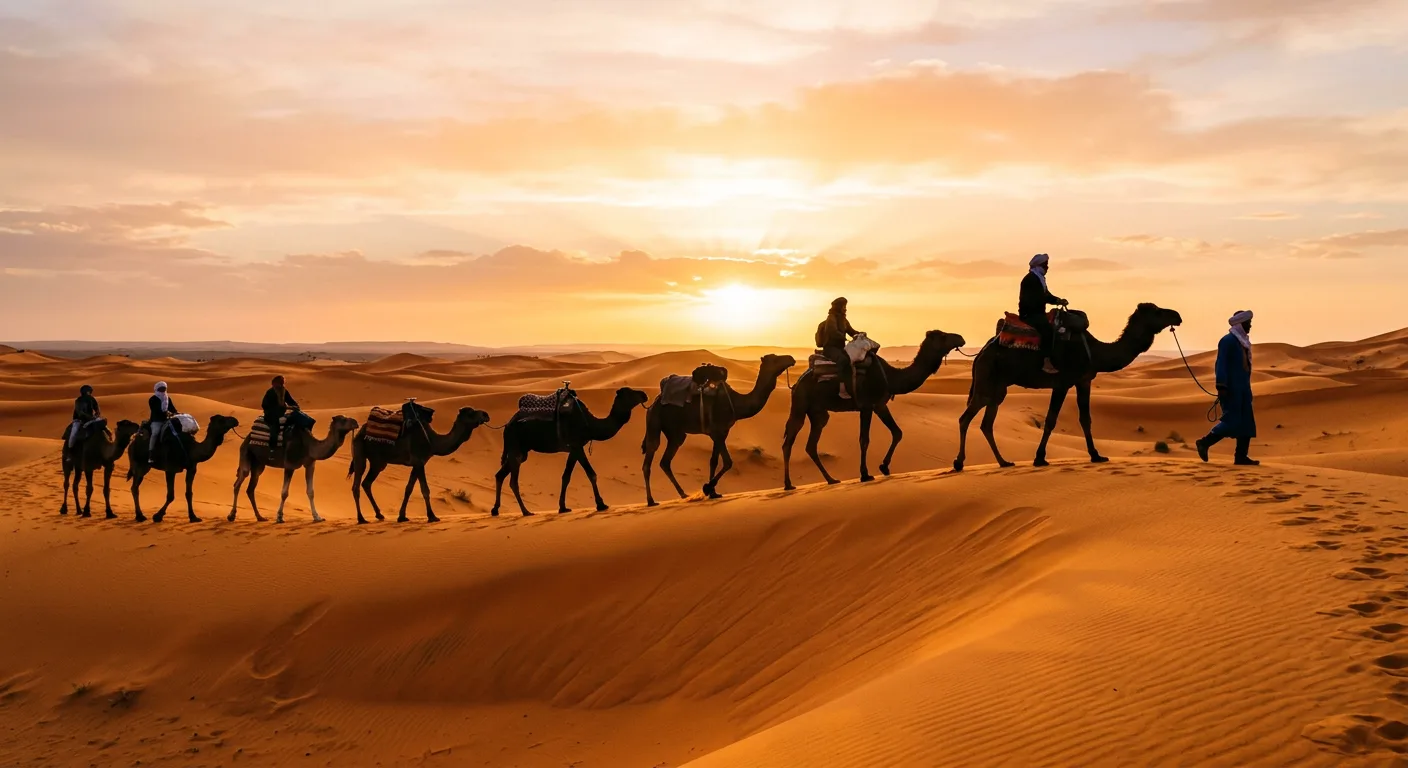
Morocco is a wonderful luxury family destination — private riads with pools and courtyards, camel rides that enchant every age, a desert camp the whole family will remember, and a culture genuinely devoted to children. With private guiding and the right pacing, it is effortless as well as magical.
In this guide
Which regions work best with children
Marrakech is the most child-friendly base: enough to fascinate without overwhelming, with riads that provide a private, secure retreat. The Sahara — specifically a night at a desert camp — is the universal highlight for children of almost any age from about six upwards; the camel ride, the dune climb and the stars are genuinely magical. The High Atlas villages make a superb half-day or full-day excursion from the city.
The Atlantic coast (Essaouira, Agadir) adds beach days to a cultural trip and suits families with very young children who need downtime between sights. Fes is rewarding but its medina is dense and confusing — best with older children (eight-plus) who can keep up and stay alert in narrow lanes.
Pacing and riads vs hotels
Exclusive-use riads and those with a pool or garden courtyard are a revelation with children. The enclosed space gives young ones room to run while parents relax with a glass of wine on the terrace; no lobby, no busy restaurant entrance, and staff who genuinely adore children and will tailor mealtimes, babysitting and family suites to suit. For larger families, taking over a small riad entirely is the height of stress-free luxury. Budget an extra half day in each place rather than cramming in too many sights.
Avoid peak summer heat (July–August) inland; children overheat quickly and Marrakech at 40°C is unpleasant for everyone. Spring (March–May) and autumn (September–November) are the ideal windows — warm, comfortable days and cool evenings.
The desert with children
Merzouga (Erg Chebbi) is the most accessible Sahara destination and a triumph with families. A short private camel ride (20–40 minutes) into the dunes delights even young children; luxury camps offer proper beds, ensuite bathrooms, family tents and attentive staff rather than sleeping bags on the sand — sandboarding, a star-gazing session and a private dinner round out the magic. Bring warm layers, as desert nights cool dramatically even in spring. Avoid July and August with young children: daytime temperatures exceed 40°C and the experience becomes endurance rather than enchantment.
Food and practicalities
Moroccan food is family-friendly: mild tagines, flatbreads, couscous, fresh juices and pastries. Avoid tap water and unpeeled raw salads; stick to bottled water and cooked food, especially for young children. Most riads are happy to adjust seasoning and serve children's meals at non-standard hours. Pack familiar snacks for long driving days — the Atlas and desert roads are beautiful but long.
- Bring: high-factor sun cream, a children's insect repellent, anti-diarrhoea medicine, and oral rehydration sachets.
- Private transport is essential with children — you control the pace and the stops.
- Most riads are genuinely child-welcoming; ask about family rooms and pool availability when booking.
- Pharmacies (farmacie) are common in Moroccan towns and well-stocked for basic medicines.
Frequently asked
What is the best age to take children to Morocco?
From about five or six, children get the most from Morocco — old enough for the camel trek, the medina souks and the desert night sky. Younger children can absolutely come, but the dense medinas and long drives are harder work; choose a riad with a pool and keep days shorter.
Is the Sahara safe for children?
Yes, with sensible planning. The dune camel trek is short and gentle, luxury camps have proper beds and bathrooms, and the environment is safe. Avoid visiting July and August with young children due to extreme heat. Spring and autumn are ideal.
Are riads suitable for families?
Most riads are excellent for families. The enclosed courtyard or pool provides a safe space; many have family suites or adjoining rooms. Ring ahead to check pool depth and room configuration — some smaller riads have steep staircases.
Is Moroccan food suitable for children?
Broadly yes — bread, mild tagines, couscous, fresh fruit and pastries are universally appealing. Stick to bottled water and cooked food. Riads and tourist restaurants are happy to adjust spice levels and serve plain options.
What is the best region in Morocco for families?
Marrakech as a base (with a riad with a pool), a Sahara night at Merzouga, and the Atlantic coast (Essaouira or Agadir) for beach time make the ideal family loop. Avoid Fes's medina with very young children — the lanes are narrow and the crowds intense.
Planning a trip?
Let a Marrakech atelier handle the details.
Tell us your dates and style and we'll send a written itinerary and a transparent quote within 24 hours.
Request an itineraryKeep reading
Planning
The Best Time to Visit Morocco in Luxury
For a private, riad-led journey, spring (March–May) and autumn (September–November) are the connoisseur's windows — warm days, cool palace-courtyard evenings, and the desert, the Atlas and the imperial cities all showing their finest. The season you choose shapes the entire mood of the trip.
Planning
Morocco Travel Costs & Budget
A bespoke, riad-based Morocco trip with a private chauffeur-guide typically runs from around US$250–600+ per person per day, depending on the standard of riad, the desert camp chosen and the level of exclusive access. Understanding where the money lands helps you spend it where it matters most.
Practical
What to Pack for Morocco
Pack light, elegant and layered. A luxury Morocco journey moves from hot medinas to cool palace courtyards, candlelit rooftop dinners and chilly desert nights in a single trip — so think breathable linen, a few refined evening pieces, beautiful flats for cobblestones, and one genuinely warm layer.