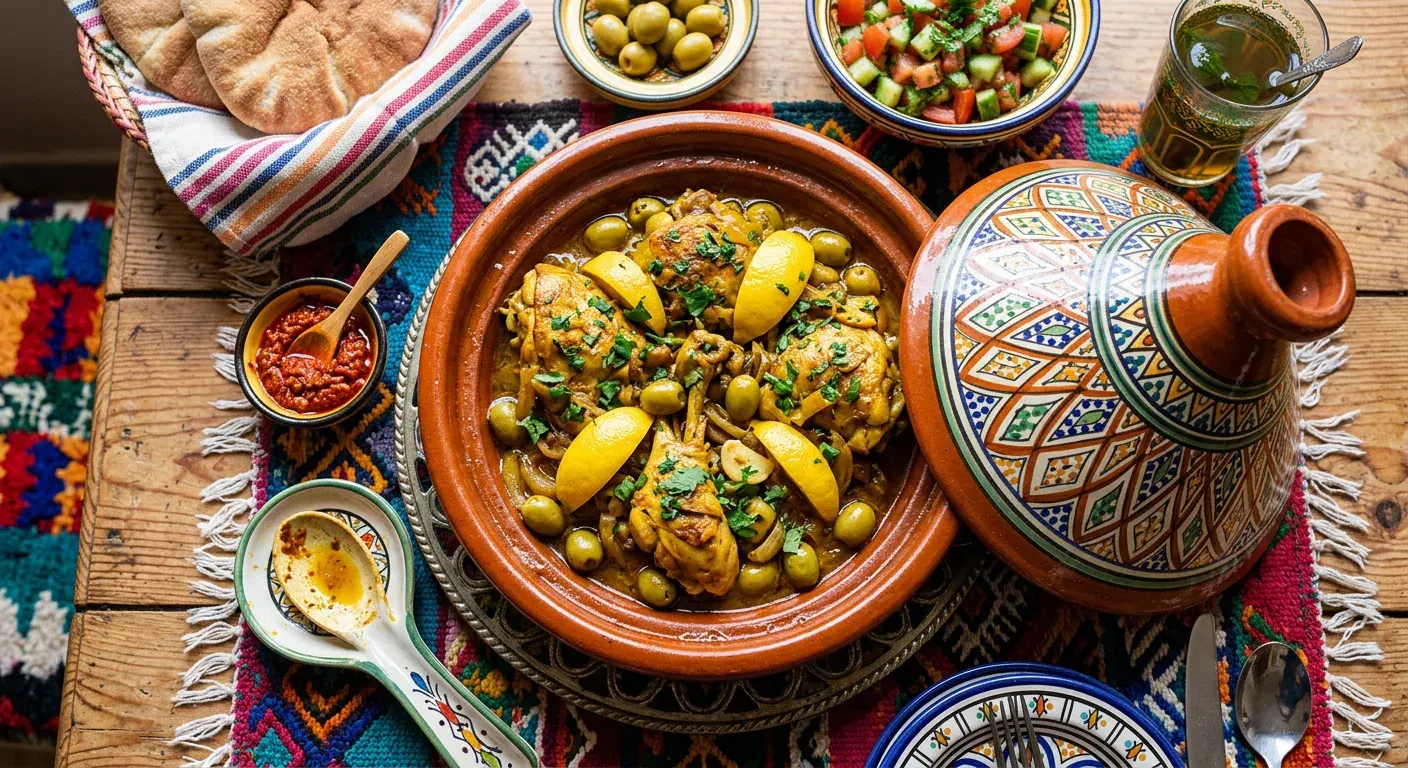
Nearly every visitor eats a tagine on their first day. The clay pot, the conical lid, the steam of saffron and preserved lemon — it is the image on every menu and postcard, and it is genuinely delicious. But to treat the tagine as the whole of Moroccan cuisine is to visit Japan and eat only ramen. Here is what the rest holds — and how we bring the finest of it to your table.
The tagine, properly understood
The word tagine names both the vessel and the dish within it. The conical lid traps steam and returns it as condensation — a slow braise that renders even modest cuts meltingly tender. The classic pairings are lamb with prunes and almonds (mrouzia), chicken with preserved lemon and olives, and kefta with eggs. Each carries its own spice profile; the lemon chicken is the gentlest and the most beloved by international guests.
The finest tagines are rarely on a tourist menu. We can arrange a private cooking experience in a riad kitchen, or a dinner where the pot has been on low heat since morning — the slow, true version that few visitors ever taste.
Pastilla — the Fassi triumph
If the tagine is Morocco's everyday dish, pastilla is its haute cuisine. Paper-thin warqa pastry enfolds slowly braised pigeon or chicken with egg, saffron and coriander, the whole crowned with cinnamon and a veil of sugar — sweet and savoury in a single flaky parcel. It was born in Fes, where the best are still made, though the grand Marrakech riads prepare a beautiful version for special dinners. The seafood pastilla of Essaouira is worth seeking too, and we can have it served at your private table.
Couscous — the Friday ritual
Couscous is the dish families gather around on Friday after the midday prayer — domestic, maternal, communal, rather than a restaurant staple. The semolina is steamed three times over a fragrant broth, piled into a dome and dressed with slow-cooked vegetables and a choice of lamb, chicken or simply vegetables. Restaurants serve it on Fridays and Saturdays; for a private dinner, we can have an exceptional version prepared on any day you wish.
The theatre of the street
Djemaa el-Fna at dusk is the most theatrical food scene in Morocco. After six the square fills with charcoal smoke and the calls of the stall keepers. The snail-broth stalls serve a cumin-spiked cup you eat with a pin; grilled merguez in a crusty baguette, msemen with argan honey and orange juice pressed to order are the standards. With a private guide you sample the very best of it, before slipping away to a quiet, candlelit dinner.
In Fes, seek the Rcif quarter, where bissara — thick fava bean soup with cumin and a slick of olive oil — is taken standing for breakfast, bread dipped straight into the bowl. In Essaouira, sardines split and grilled at the port are the defining bite of the coast. Your guide knows precisely where each is finest.
Vegetarian and vegan dining
Moroccan cooking is wonderfully generous to non-meat eaters, though veganism is less familiar and benefits from a clear word in advance. The salad starters — zaalouk, taktouka, cumin-spiced carrot, beetroot with chermoula — are plant-based and arrive almost automatically, and a fragrant vegetable tagine with olives and preserved lemon is everywhere. We brief every kitchen ahead of time about smen (aged butter) and egg, so your table is composed exactly to your needs, without negotiation in the moment.
Private cooking experiences
A private half-day in the kitchen is among the loveliest experiences Morocco offers. We begin with a guided souk walk to source the ingredients — watching a spice merchant blend ras el hanout by hand is reward enough — then move into a riad kitchen with a skilled cook to prepare three dishes, which you enjoy afterward at your own table with mint tea and a quiet sense of accomplishment. Intimate and hands-on, it is a favourite of couples, and we weave it into our cultural journeys or arrange it on its own.
What to drink
Morocco is a Muslim country; fine wine and spirits are served at licensed restaurants and hotels, and we ensure the cellar suits your evening. The signature drink is atay — mint tea poured from a height to crown it with foam, three glasses in succession, each, the saying goes, with its own character. Fresh orange juice, almond milk and avocado smoothies are lovely alternatives. We provide sealed bottled water throughout.
Frequently asked
Is Moroccan food spicy?
Moroccan cooking is aromatic rather than fiery. Ras el hanout, cumin, cinnamon, saffron and preserved lemon lead the flavours. Harissa appears as a condiment on the side in some regions, never built into the dish as in Thai or Indian cooking. Guests who prefer gentler heat are entirely at ease — and the kitchens we choose adjust with grace to any preference.
What is the difference between a tagine and a couscous?
Both are slow and aromatic, but the tagine is a braise — meat and vegetables cooked low in the conical clay pot until meltingly tender. Couscous is steamed semolina crowned with a separately cooked stew, traditionally the Friday family dish. In restaurants couscous tends to appear on Friday and Saturday; for a private dinner we can have either prepared whenever you wish.
What should vegetarians and vegans order in Morocco?
Moroccan cooking is wonderfully generous to non-meat eaters. Zaalouk (smoky aubergine and tomato), taktouka (roasted pepper), bissara (fava bean soup with cumin and olive oil) and a fragrant vegetable tagine are all excellent and everywhere. Vegans should note smen (aged butter) is common in cooking — we brief every kitchen in advance, so your table is composed exactly to your needs.
What are the loveliest street foods to seek in Marrakech?
Djemaa el-Fna at dusk is the finest street-food theatre in North Africa — grilled merguez, snail broth in a cup, msemen with argan honey, orange juice pressed to order. With a private guide you taste the best of it, knowing which stall is which, before retiring to a candlelit riad table for dinner. The spectacle without the guesswork.
Can you arrange a private cooking experience in Morocco?
Yes, and we count it among the loveliest half-days of any Morocco journey. We begin with a guided souk walk to source ingredients, then move into a private riad kitchen with a skilled cook to prepare two or three dishes — which you then enjoy at your own table. It is intimate, hands-on and beautifully suited to couples.
Is tap water safe to drink in Morocco?
Tap water is treated but varies by city and quarter, so we provide sealed bottled water throughout for drinking and brushing teeth. Restaurants cook with tap water without issue. Skip ice at street stalls; ice in established restaurants and fine kitchens is perfectly fine.
Dine beautifully in Morocco
We weave a culinary thread through your whole journey.
From a guided Djemaa el-Fna tasting to a private Fassi cookery class and a candlelit riad dinner, Morocco Honeymoons folds the best of Moroccan cuisine into every journey — with every dietary preference arranged quietly in advance.
Enquire about a culinary itinerary