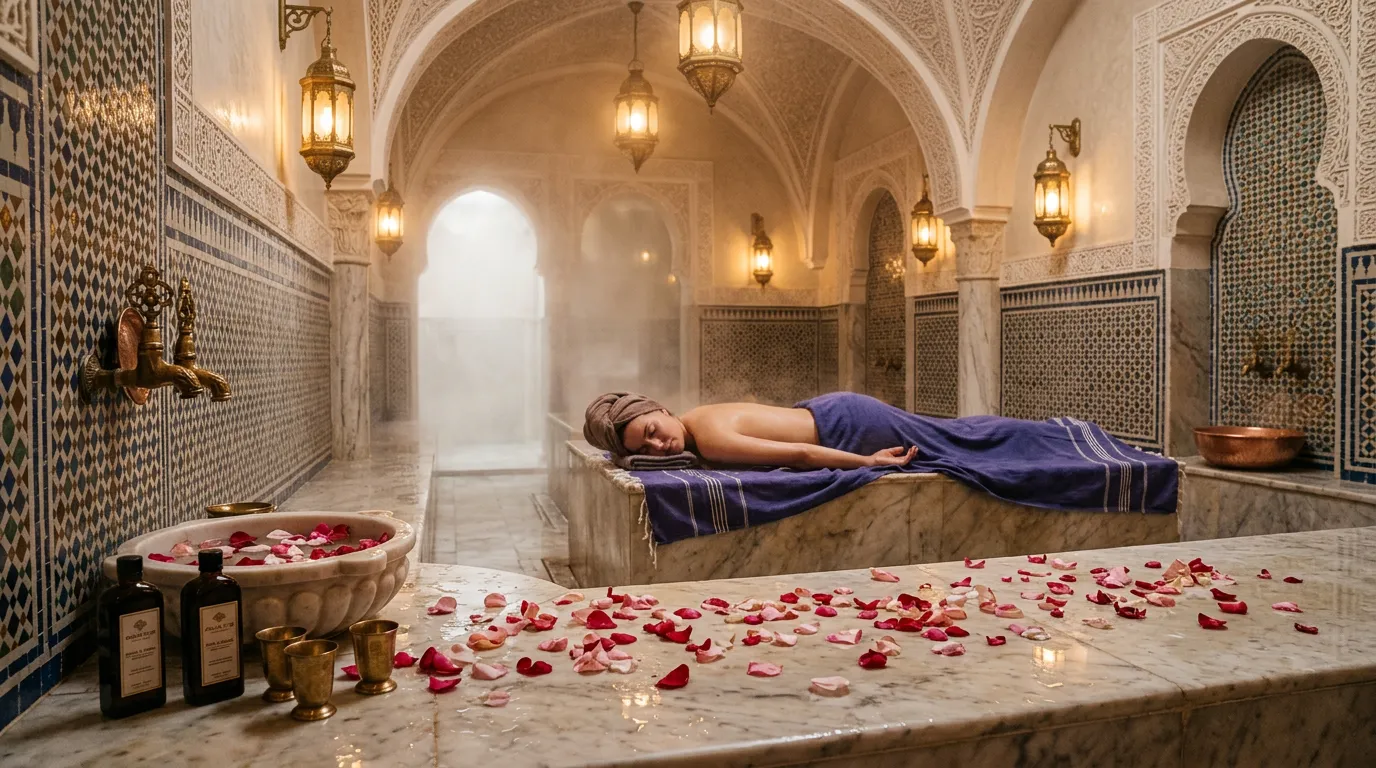
A Moroccan hammam is a centuries-old steam-bath and cleansing ritual — you soften in warm steam, are washed and deeply exfoliated with black soap and a coarse glove, then masked with rhassoul clay and rinsed — and on a luxury trip it becomes one of the most restorative, quietly sensory experiences in the country. In a riad or palace spa the same ancient ritual is given as a private, candlelit treatment, often followed by an argan-oil massage, so you emerge glowing and unusually calm. Below, an honest guide to what actually happens, the difference between a neighbourhood hammam and a luxury spa, and how to fold one beautifully into your journey.
What exactly is a hammam?
A hammam is a steam bath — close cousin to the Turkish bath — that has been woven into Moroccan life for generations. Traditionally it is a communal neighbourhood institution: people go weekly to bathe, exfoliate and catch up with their community, in sessions segregated by gender. The ritual itself is simple and ancient. You warm and soften in humid steam, are lathered in savon beldi — a dark, soft soap made from black olives — and then scrubbed firmly with a kessa glove that lifts away dead skin. A rhassoul (mineral clay) mask and a warm rinse complete it. It is bathing, but it is also wellness, and in its public form a piece of living culture. Almost every riad and good hotel now offers a refined, private version of the same ritual in its spa.
What actually happens, step by step
A luxury hammam usually runs somewhere between forty-five minutes and ninety minutes, depending on whether you add a massage. The shape is consistent:
- Warm and soften. You undress to your comfort — most people keep underwear or swimwear on — and settle into a warm, steamy room. A therapist douses you with warm water until your skin relaxes.
- Black soap. Savon beldi is massaged over your body and left for a few minutes to soften the skin and open the pores.
- The scrub. The therapist works over you with the kessa glove. This is firm, and the amount of dead skin it removes surprises everyone the first time — it is the heart of the ritual.
- Clay and rinse. A rhassoul clay mask (sometimes with an argan or rose treatment) is applied, then rinsed away with warm water, leaving skin remarkably smooth.
- The finish. In a spa setting this is often followed by an argan-oil massage. You rest, rehydrate — frequently over a glass of Moroccan mint tea — and leave pink, glowing and deeply unwound.
Public hammam vs luxury spa hammam
There are really two experiences sharing one name, and they are different pleasures rather than competing ones. Many travellers try a public hammam once for the cultural truth of it, and book a private spa hammam for pure indulgence.
| Public (neighbourhood) hammam | Luxury spa hammam | |
|---|---|---|
| Setting | Communal, bustling, tiled local bathhouse | Private or semi-private, hushed, candlelit |
| Privacy | Segregated by gender; shared space | Private; couple's hammams possible |
| What you bring | Your own soap, glove, towel, flip-flops | Nothing — robes, products and towels provided |
| Best for | Authenticity and a real slice of daily life | Comfort, romance and a serene reset |
What does a luxury spa day in Morocco involve?
At the luxury end, the hammam is usually the centrepiece of a longer ritual rather than a stand-alone wash. A typical spa afternoon in a fine riad or palace hotel might open with the hammam — steam, black soap, the kessa scrub and a rhassoul mask — and flow into a full argan-oil massage, a facial using local botanicals such as argan, rose and orange blossom, and a slow rest with tea afterwards. The settings are part of the pleasure: marble basins, zellij tilework, candlelight and quiet. Treatments and products vary widely between properties, so rather than naming names we simply match you to a riad or spa whose style and standard suit you, and we do not invent prices, rooms or ratings we cannot stand behind. Many of the best spas are inside the same riads worth staying in, so a spa afternoon can simply be part of where you already sleep.
A romantic ritual for two
A couple's hammam — the two of you in a private candlelit room, followed by side-by-side massages — is one of the most quietly romantic things to do in Morocco, which is why it features so often on honeymoons and anniversaries. Public hammams are segregated by gender and cannot be shared, so the togetherness happens in a private riad or hotel spa, booked ahead. We weave a couple's hammam into romantic journeys such as our ten-day honeymoon of riads, roses and desert; for how the whole romantic trip is shaped, see our guide to a Morocco honeymoon — where, how long and when.
Etiquette: what to wear, what to bring
For a luxury spa hammam there is almost nothing to organise — you arrive, and robes, slippers, towels and all the products are provided; you keep underwear or swimwear on for modesty and the therapist guides you through. For a traditional public hammam you bring your own kit: flip-flops, a towel, a change of underwear, black soap and a kessa glove, all sold cheaply in the souks. Wear underwear or swimwear throughout, respect the gender-segregated areas, leave valuables at your riad, and allow time afterwards to rehydrate and rest rather than rushing back into the heat. A modest, courteous approach is always welcome — for the wider context, our etiquette and customs guide is a useful companion, and tipping is a kind gesture, handled as set out in our practical tipping guide.
When to do it on your trip
A hammam is at its most welcome after exertion — after the dust of the Sahara, a long medina day or a mountain walk — so it makes a perfect reset roughly midway through a journey, or as a slow, restorative finish before you fly home. It folds naturally into a city stay: a relaxed Marrakech luxe weekend (from US$2,200 per person) builds the medina, the gardens and a hammam into three unhurried days, while our Atlas & Atlantic Luxe journey sets a private hammam among Berber villages and the coast. Whatever the shape of your trip, a spa afternoon is one of the easiest pleasures to add and one of the most fondly remembered.
So — is a hammam worth it?
For most travellers, wholeheartedly yes. It is unmistakably Moroccan, genuinely restorative, and — in its private spa form — as serene and romantic as travel gets. If you are curious about the culture, try a public hammam once; if you want pure comfort, book a private one in a riad or hotel spa. Either way, go with an open mind about the firm scrub, and give yourself nothing to do afterwards but rest. Tell us your dates and the pace you want and we will build the right kind of spa day into a fully private journey — see our private journeys or simply tell us what you have in mind.
Frequently asked
What is a Moroccan hammam?
A hammam is a traditional steam bath and cleansing ritual that has been part of Moroccan life for centuries. You sit in a warm, humid room while your skin softens, then are washed and deeply exfoliated with black olive-oil soap (savon beldi) and a coarse kessa glove that lifts away dead skin, often followed by a rhassoul clay mask and a rinse with warm water. It is part bathing, part wellness ritual and part social institution — Moroccans have used neighbourhood hammams for generations, and almost every riad, palace and good hotel now offers a private spa version of the same ritual.
What happens during a hammam, step by step?
A typical hammam runs roughly forty-five minutes to an hour and a half. You undress to your comfort (most people keep underwear or swimwear on), settle into a warm steam room, and are doused with warm water. Black soap is massaged in and left to soften the skin, then a therapist scrubs you firmly with the kessa glove — this is the part first-timers remember, as it removes a startling amount of dead skin. A rhassoul clay or argan treatment may follow, then a warm rinse, and often a relaxing argan-oil massage to finish. You emerge pink, glowing and unusually relaxed. The pace and intensity vary between a traditional public hammam and a gentle luxury spa version.
Is a hammam worth doing on a luxury Morocco trip?
For most travellers, yes — it is one of the most distinctly Moroccan things you can do, and a private riad or hotel hammam is a serene, sensory highlight rather than a chore. It also has a practical payoff after dusty desert days or long medina walks: skin feels genuinely renewed and the deep relaxation helps you reset. On a honeymoon or anniversary, a couple's hammam followed by a side-by-side massage is a quietly romantic ritual. The main caveat is comfort with the format — you are washed by a therapist and the scrub is firm — so if you prefer a gentler treatment, a luxury spa hammam lets you set the intensity.
What is the difference between a public hammam and a luxury spa hammam?
A public (neighbourhood) hammam is where most Moroccans actually go — inexpensive, communal, separate sessions for men and women, bring-your-own kit, and a wonderfully authentic, no-frills experience. A luxury spa hammam — in a riad, palace hotel or dedicated spa — is private or semi-private, with hushed candlelit rooms, premium products, a longer ritual and the option of a massage afterwards. Neither is 'better': the public hammam is the cultural reality, the spa hammam is the refined, comfortable version. Many discerning travellers try a public one for the experience and book a private one for pure indulgence.
What should I wear and bring to a hammam?
For a luxury spa hammam, simply turn up — robes, towels, slippers and all products are provided, and you keep underwear or swimwear on for modesty. For a traditional public hammam you bring your own: flip-flops, a towel, a change of underwear, black soap and a kessa glove (all sold cheaply in the souks), and you wear underwear or swimwear throughout. Men and women bathe in separate areas or at separate times. Leave valuables at your riad, and allow time afterwards to rehydrate and rest rather than rushing straight back out.
Can couples do a hammam together?
In a private riad or hotel spa, yes — couple's hammams and side-by-side massages are widely offered and are a popular romantic experience on honeymoons and anniversaries. Traditional public hammams, by contrast, are strictly segregated by gender, so couples cannot share those. If sharing the ritual matters to you, book a private spa hammam in advance; we can arrange a couple's hammam as part of a riad stay or fold it into a wider private journey.
A ritual woven into your journey
Tell us the pace you want — we'll build the right spa day in.
Whether it is a private couple's hammam, a slow spa afternoon mid-trip, or a restorative finish before you fly home, we'll fold it into a fully private Morocco journey — matched to a riad and spa whose style and standard genuinely suit you.
Plan a spa day into your trip