Weddings and celebrations in Morocco
Six occasions, one way of planning: private, and in writing.
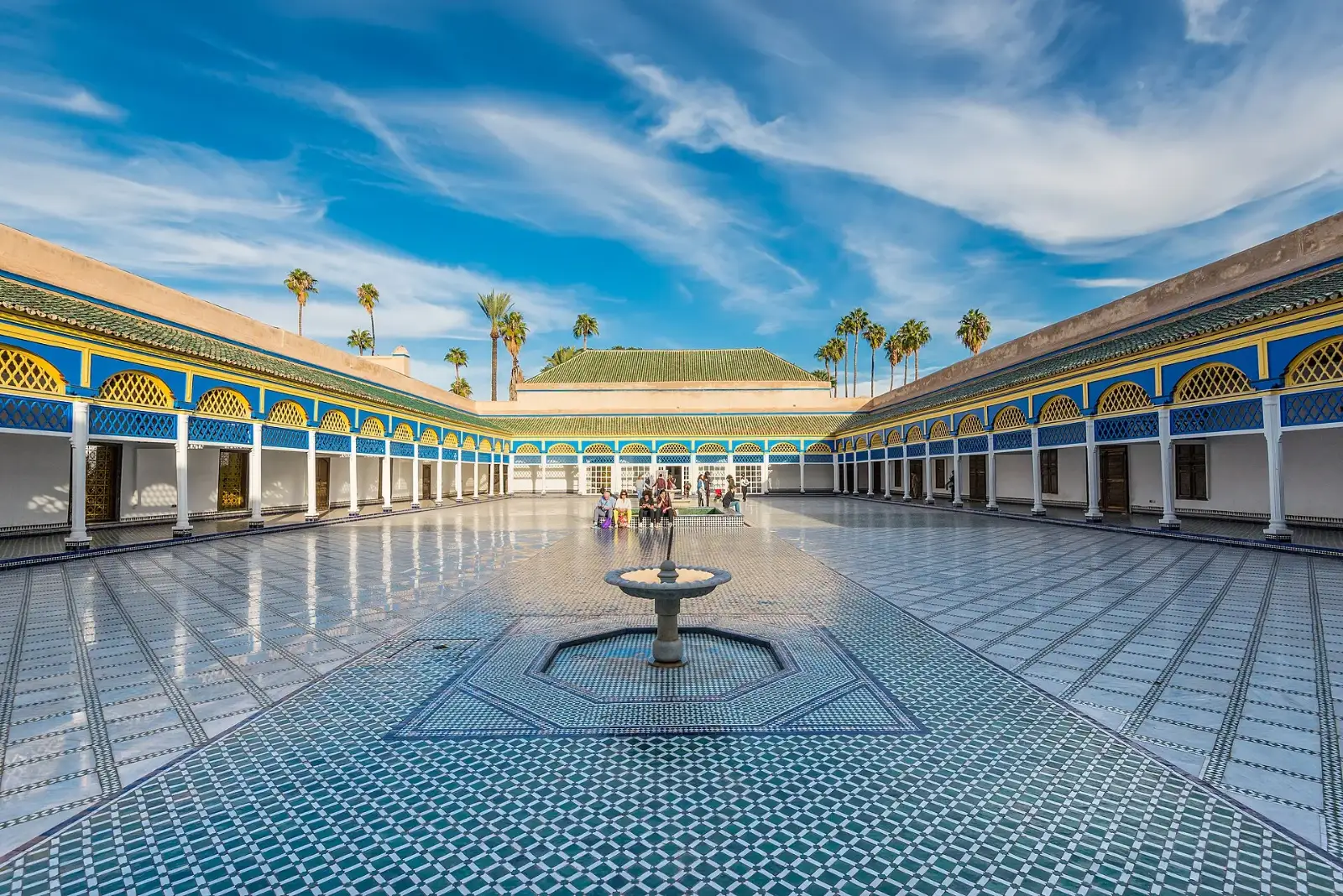
The great courtyard of the Bahia Palace, Marrakech Photo: Val Traveler, CC BY-SA 4.0, via Wikimedia Commons (resized)
The short answer
We plan private trips around the big occasions: a wedding celebration with guests, a vow renewal, a proposal, an elopement, an anniversary or a honeymoon. The settings are a riad courtyard in Marrakech, a camp in the Sahara, a terrace in the High Atlas or the coast at Essaouira. We plan the trip and the event around it: the setting, the evening, the stays, the driver-guides, transfers and dinners, with local suppliers for the rest, all in one written quote. The ceremony is symbolic: we are not a registry, and the legal marriage is usually done at home.
The night of a Moroccan wedding
It startsdays before,and ends at dawn.
A Moroccan wedding is not one ceremony but a run of evenings: the hammam, the henna, then the night itself, which often goes on into the early morning. Guests are welcomed with dates and milk, and the bride appears again and again, each time dressed differently. Here is how families here keep it, so you can choose what to bring into your own celebration. Customs vary from region to region and family to family.
- The hammam
- The henna
- The negaffa
- The amariya
- The changes
- The music
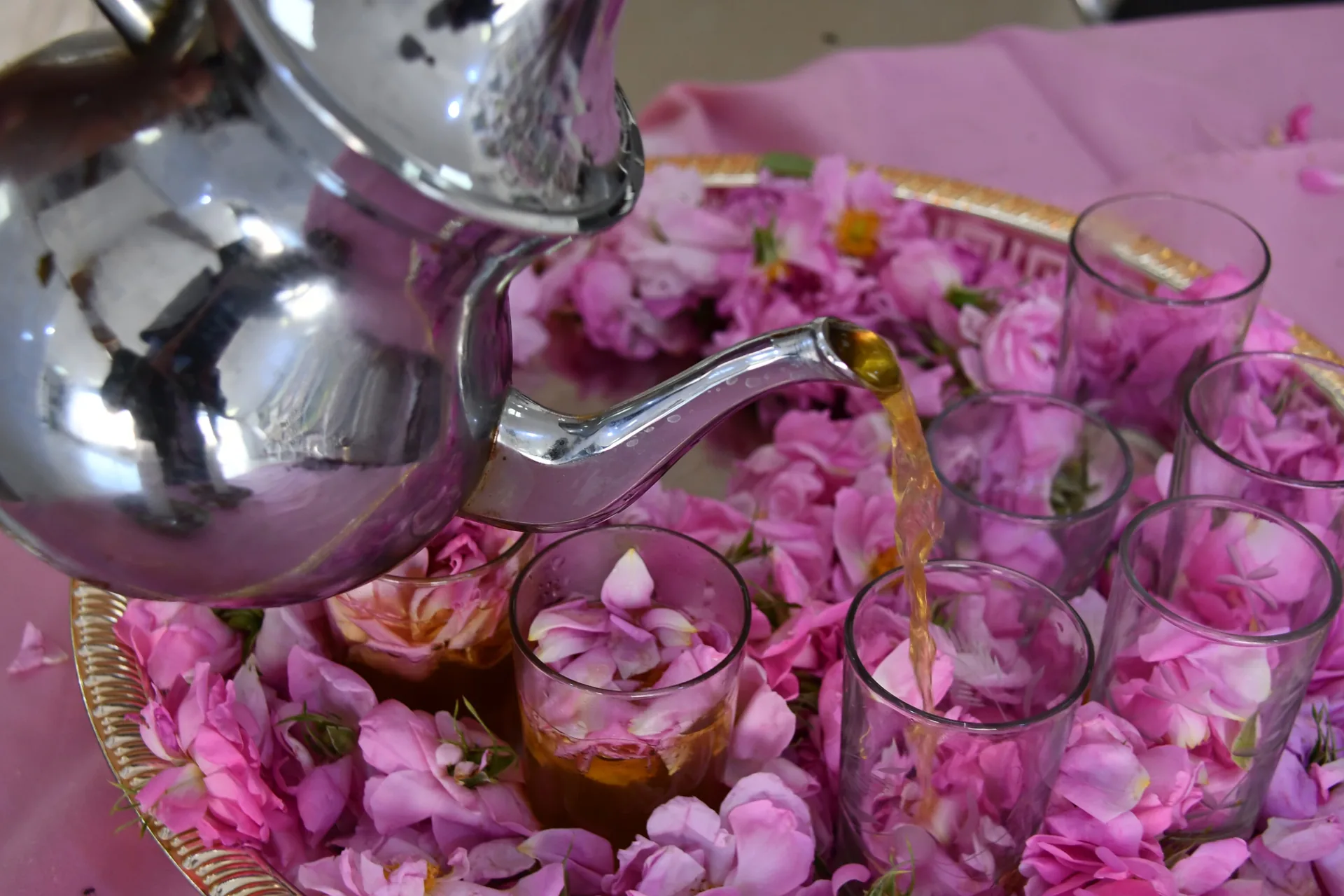
Tea among rose petals, Kelaat M'Gouna · Photo: مصطفى ملو, CC BY-SA 4.0, via Wikimedia Commons (resized)
Two days before
The hammam,
then the henna.
The bride often goes to the hammam with the women of her family first. Then comes the henna night: a henna artist, the nqacha, draws patterns on the bride’s hands and feet while the women of both families sing around her. In many families the bride wears green that night, and the henna is said to bring luck to the marriage. Guests often have a small pattern drawn too.
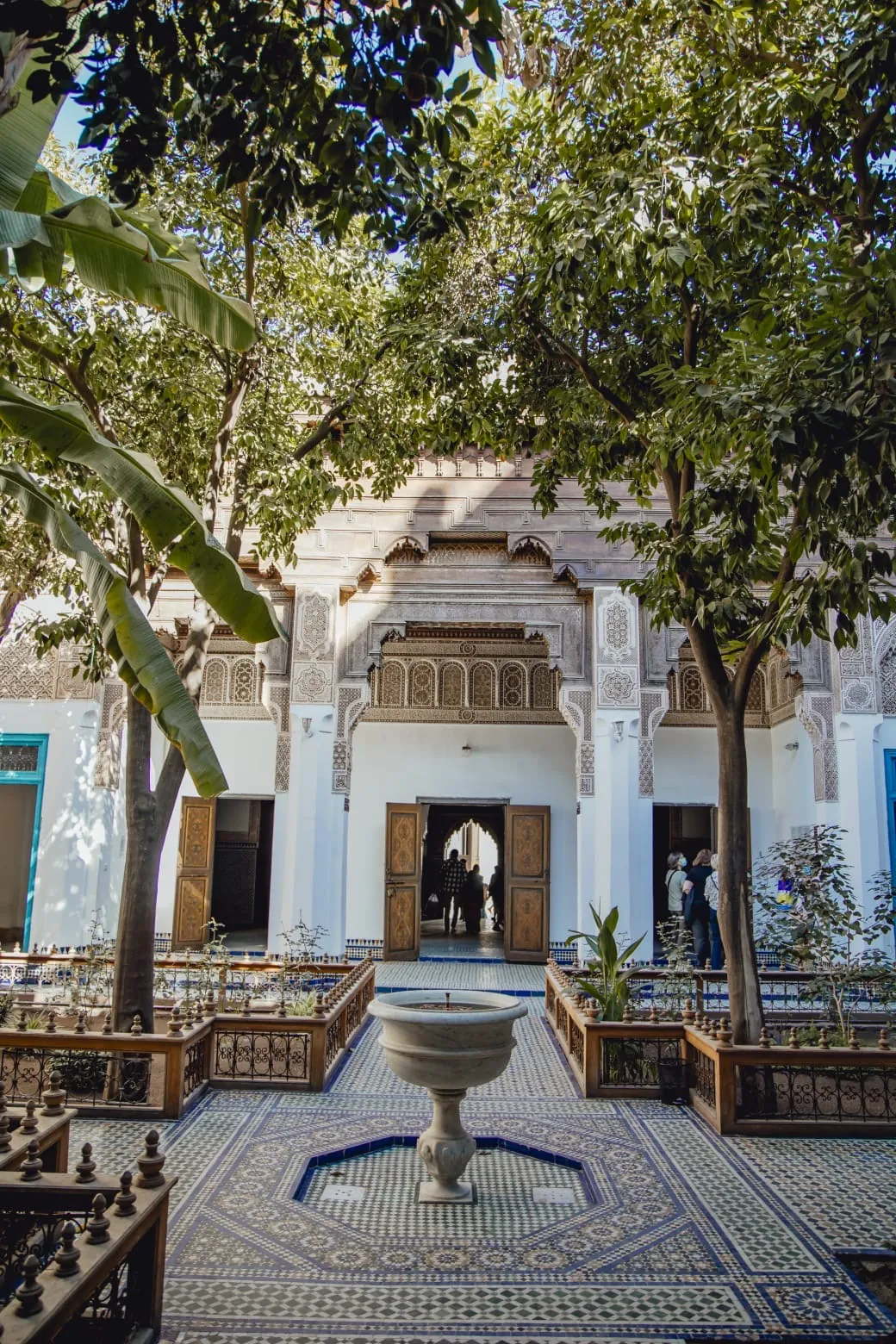
A palace garden courtyard, Marrakech
The night itself
Every bride has a negaffa.
The negaffa is the wedding dresser, and on the night she is in charge of the bride. She and her helpers bring the dresses, the jewellery and the crowns, dress the bride for each entrance, and lead her in and out of the room.
She often brings the amariya too, and the trays, the cushions and the songs that go with each part of the night. Families choose her the way they would choose a photographer: by reputation, and early.
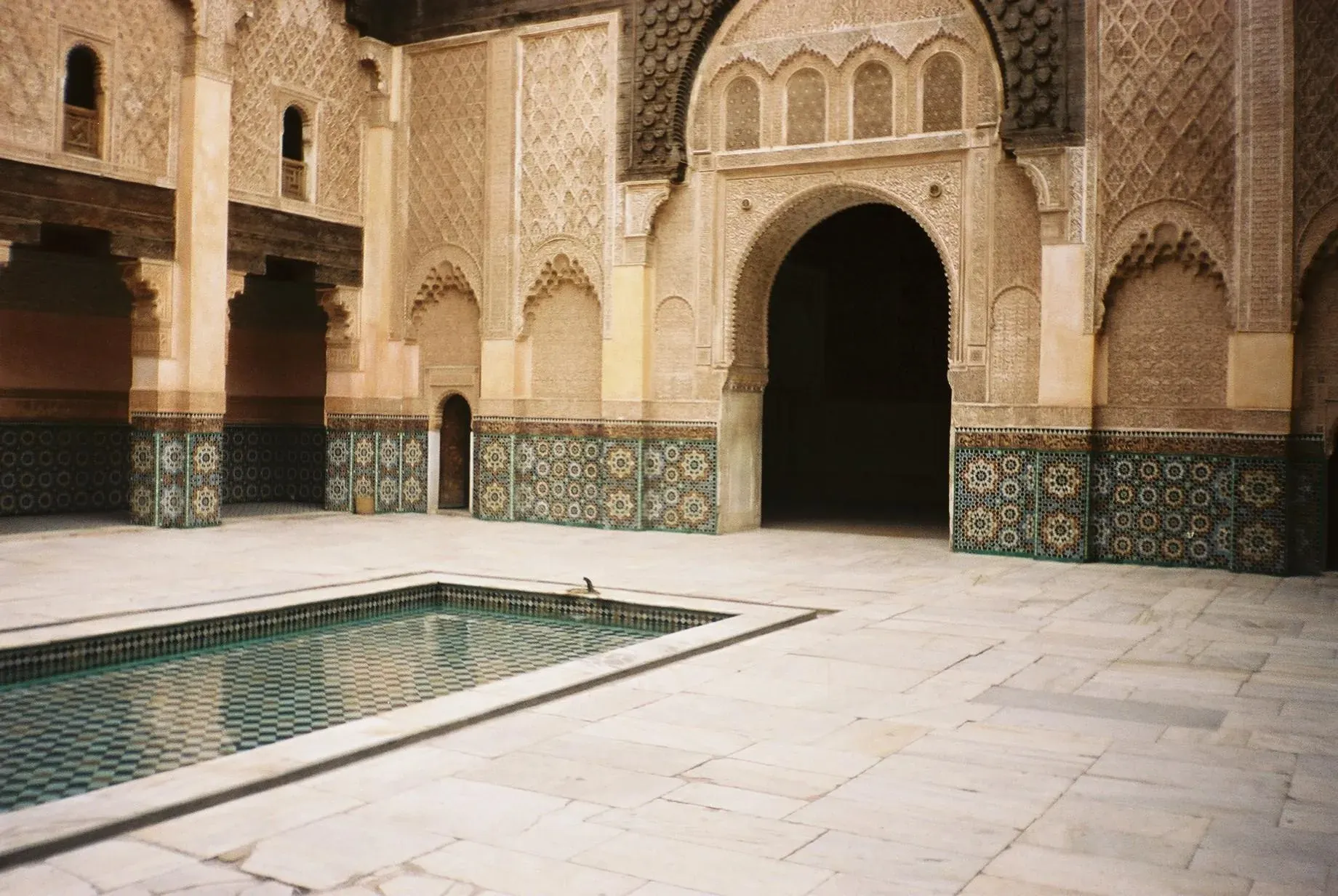
The courtyard pool of the Ben Youssef Madrasa, Marrakech · Photo: Radosław Botev, CC BY 3.0 pl, via Wikimedia Commons (resized)
The entrance
Then she is lifted
onto shoulders.
The amariya is a dressed and canopied seat. The bride sits in it, and bearers raise it onto their shoulders and carry her around the room above the guests, often to drums and ululation. In many weddings the groom is lifted too. Then the couple take their places side by side.
Bahia Palace, Marrakech · Photo: Val Traveler, CC BY-SA 4.0, via Wikimedia Commons (resized)
A palace courtyard of the kind such nights are held in.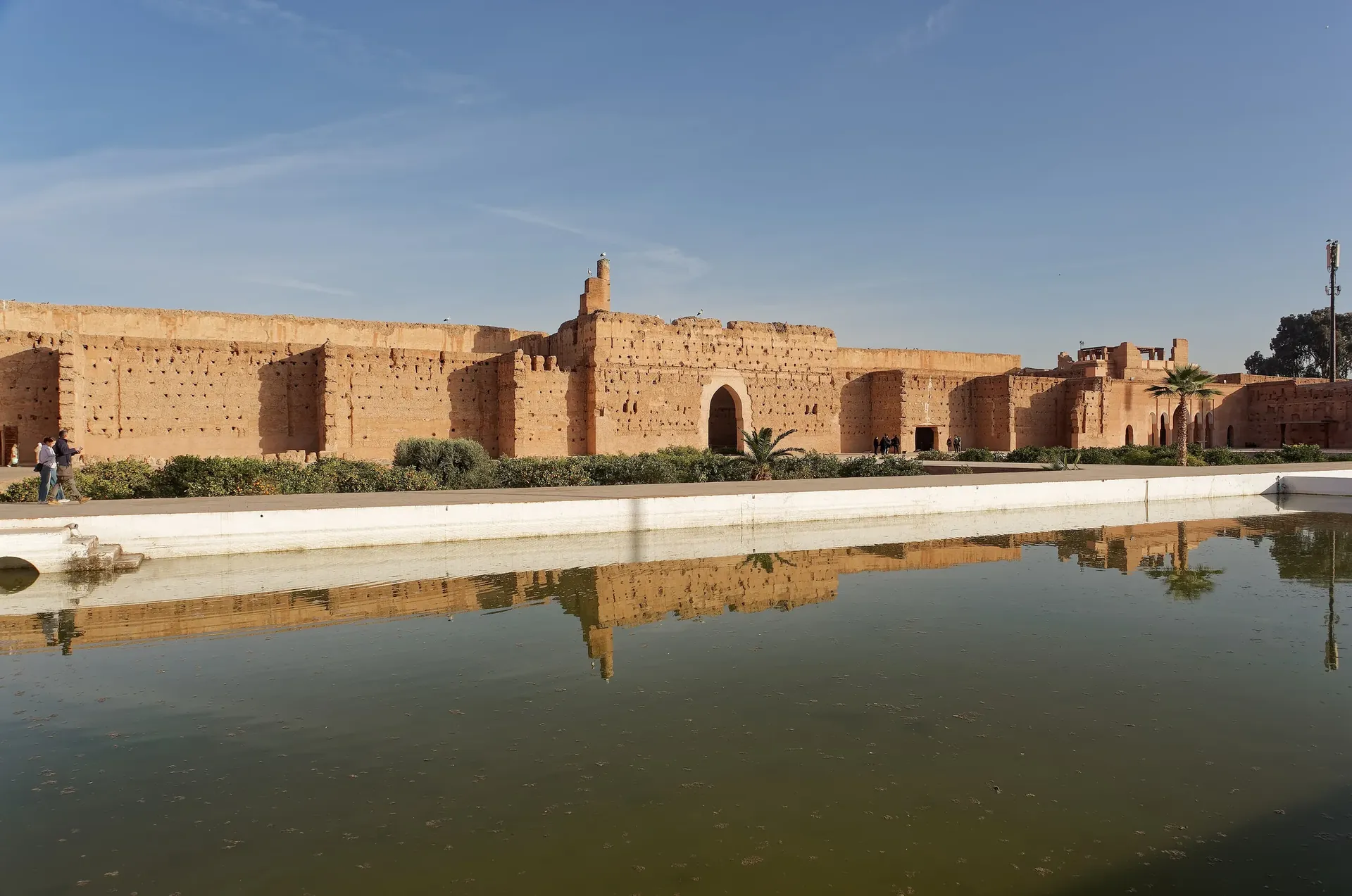
From Fez
Lebsa fassia
The heaviest and most formal: brocade and gold thread, a tall crown, strings of pearls across the brow.
The El Badi Palace ramparts in the sunken-garden pool, Marrakech · Photo: Jakub Hałun, CC BY 4.0, via Wikimedia Commons (resized)
From the cities
Takchita
Two layers, an underdress and an open overdress, closed at the waist by a wide embroidered belt.
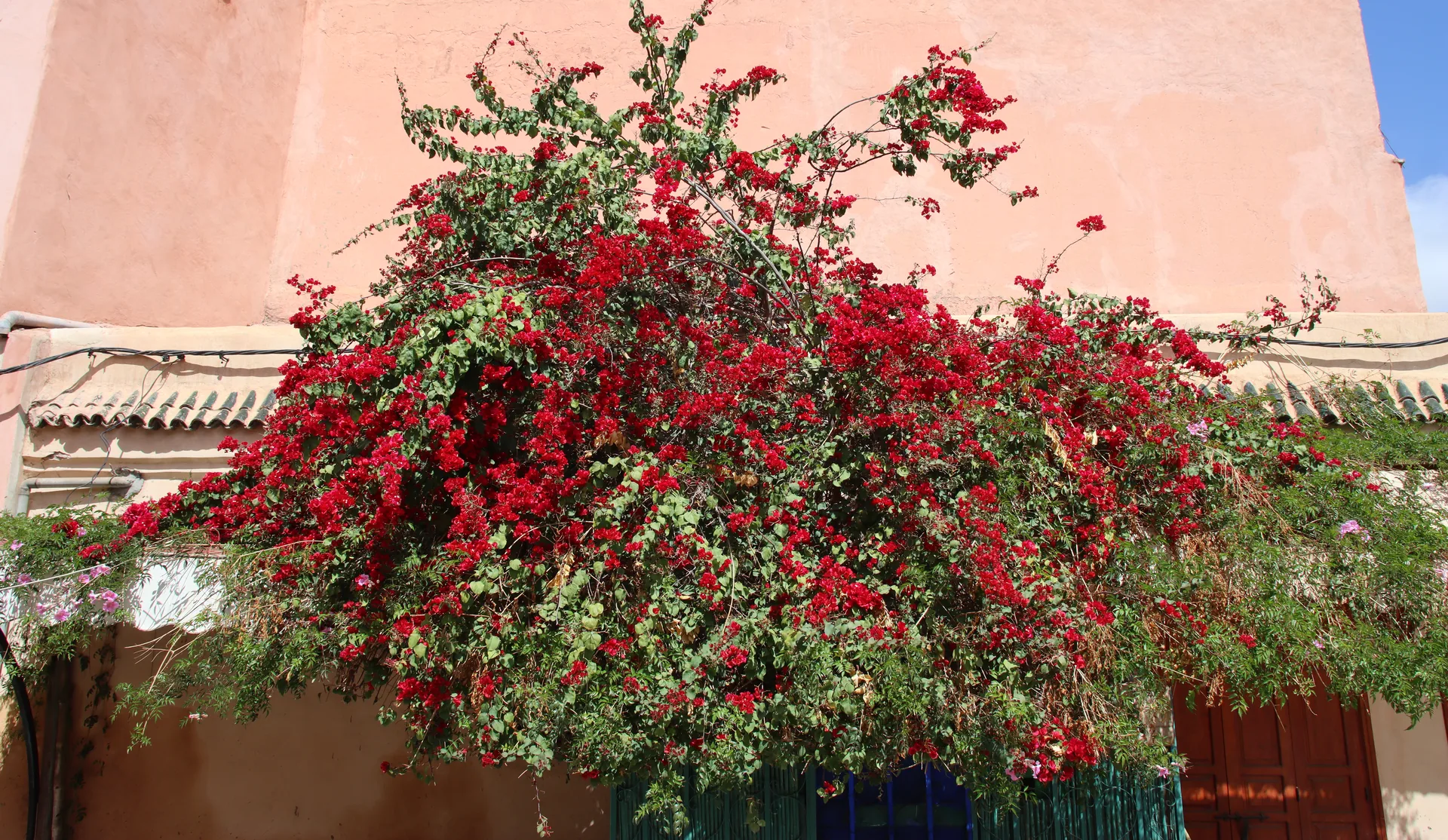
Bougainvillea at the zawiya of Sidi Abdellah el-Ghazouani, Marrakech medina · Photo: Draceane, CC BY-SA 4.0, via Wikimedia Commons (resized)
From the mountains
Amazigh dress
Draped cloth, silver fibulae at the shoulders, and the heavy silver jewellery of the Atlas and the Souss.
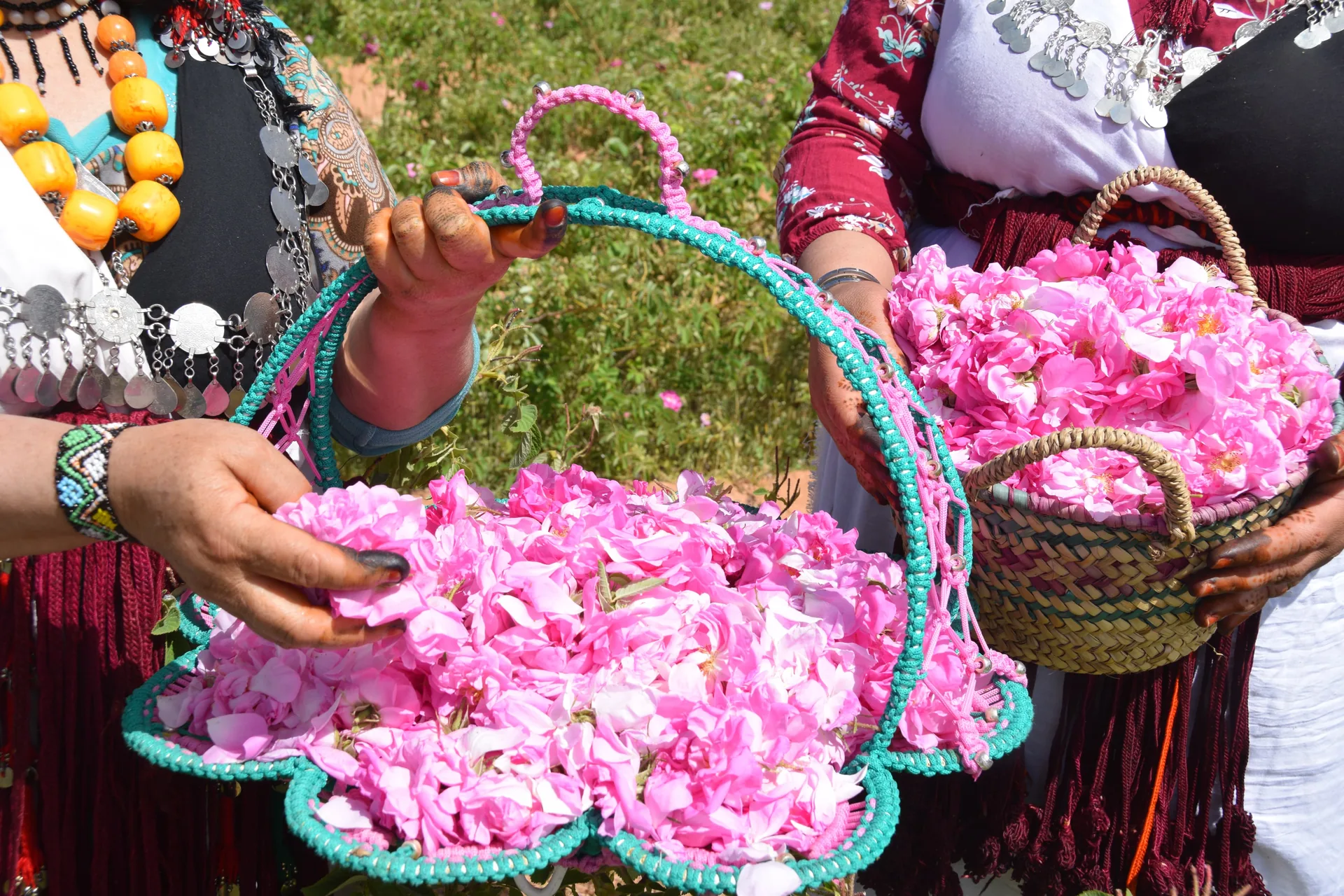
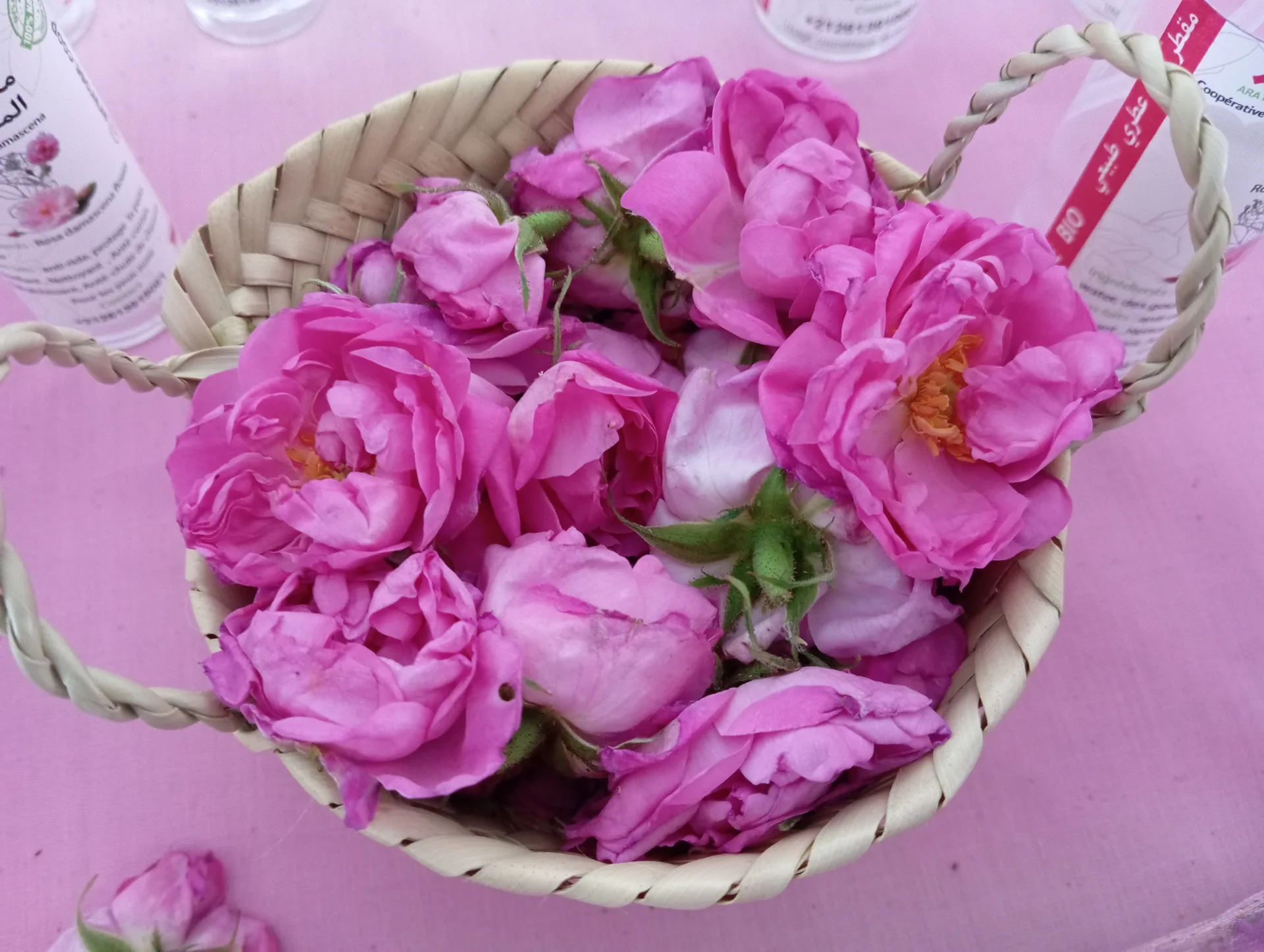
The rose harvest, Kelaat M'Gouna · Photo: مصطفى ملو, CC BY-SA 4.0, via Wikimedia Commons (resized)
From the south
Melhfa
The Sahrawi way: one long length of fine cloth, wrapped and draped over the head and body.
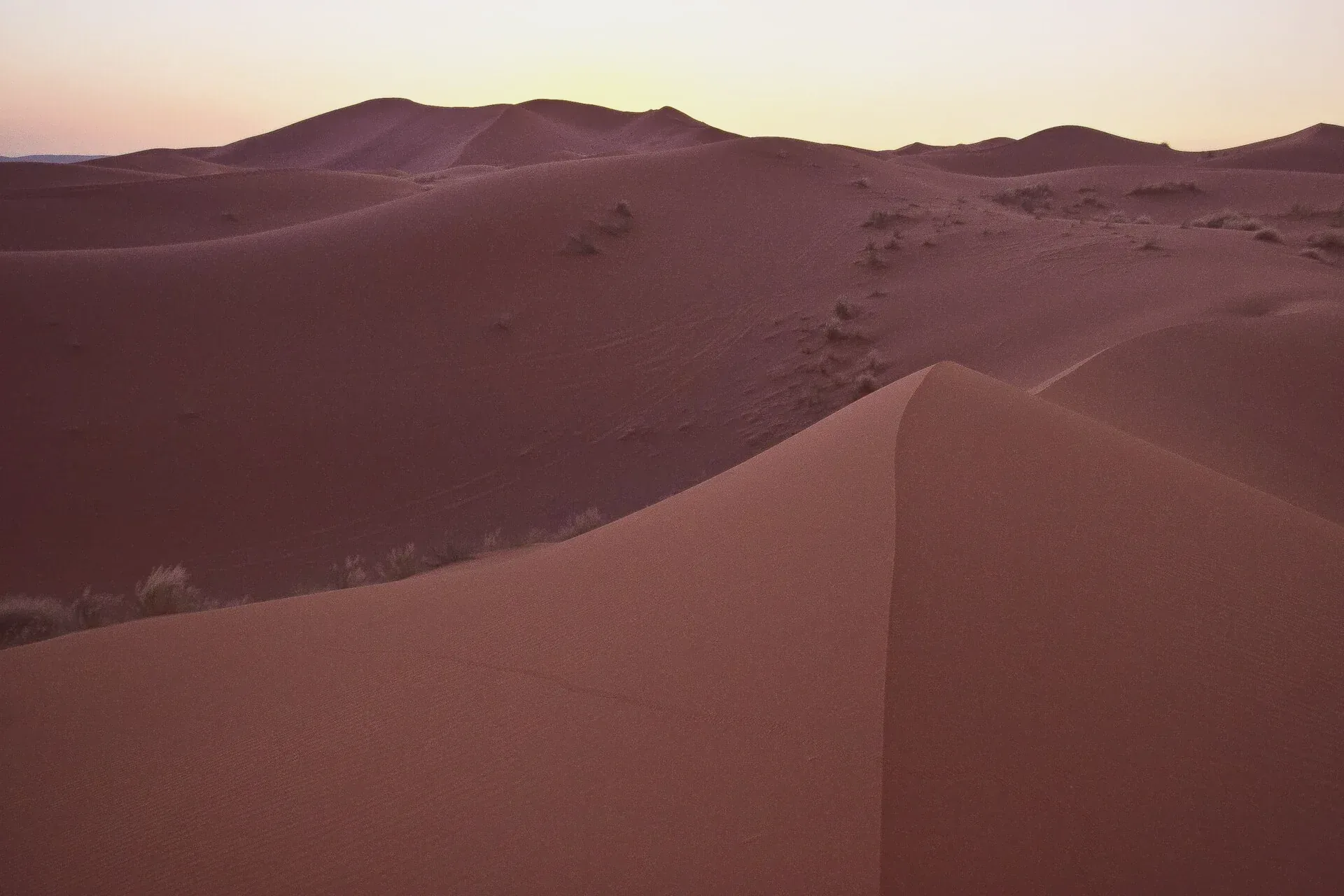
Erg Chebbi after sunset, Merzouga · Photo: Mike Prince, CC BY 2.0, via Wikimedia Commons (resized and colour-graded)
For the last entrance
And often, white
Many brides keep a white gown or a white caftan for the end of the night.
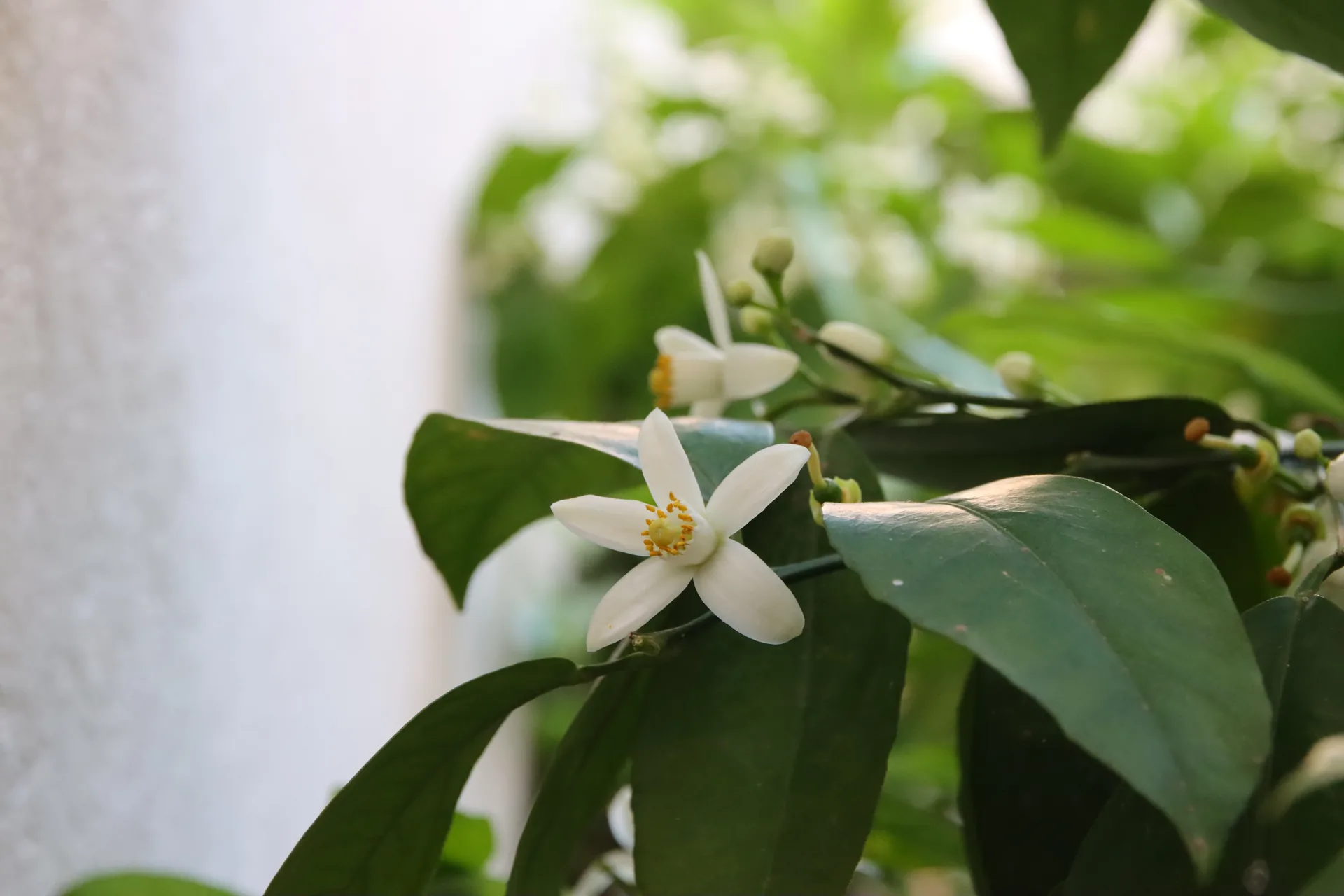
Orange blossom in a riad, Marrakech medina · Photo: Draceane, CC BY-SA 4.0, via Wikimedia Commons (resized)
Through the night, the bride changes three, five, sometimes seven times
And everyone dances
Dakka.Ahidous.
Dakka marrakchia
From Marrakech and Taroudant: a ring of men with small clay drums and frame drums, handclaps and voices, building faster and faster. At many weddings it announces the bride.
Ahidous
From the Amazigh villages of the Middle and High Atlas: men and women in long lines, shoulder to shoulder, answering each other in song over the bendir, the frame drum, and moving together as one body.
Borrow what you love.
A henna evening for your guests the night before. A negaffa, a change into a caftan, an entrance on the amariya. A dakka ring at the door, or ahidous after dinner. Tell us which of these you would love: we plan the evening with you and local suppliers, and set it all out in your written quote. The legal marriage is usually done at home; the celebration happens here.
Tell us about your celebrationFresh damask roses, Kelaat M'Gouna · Photo: مصطفى ملو, CC BY-SA 4.0, via Wikimedia Commons (resized)
Six occasions
Which occasion are you planning?
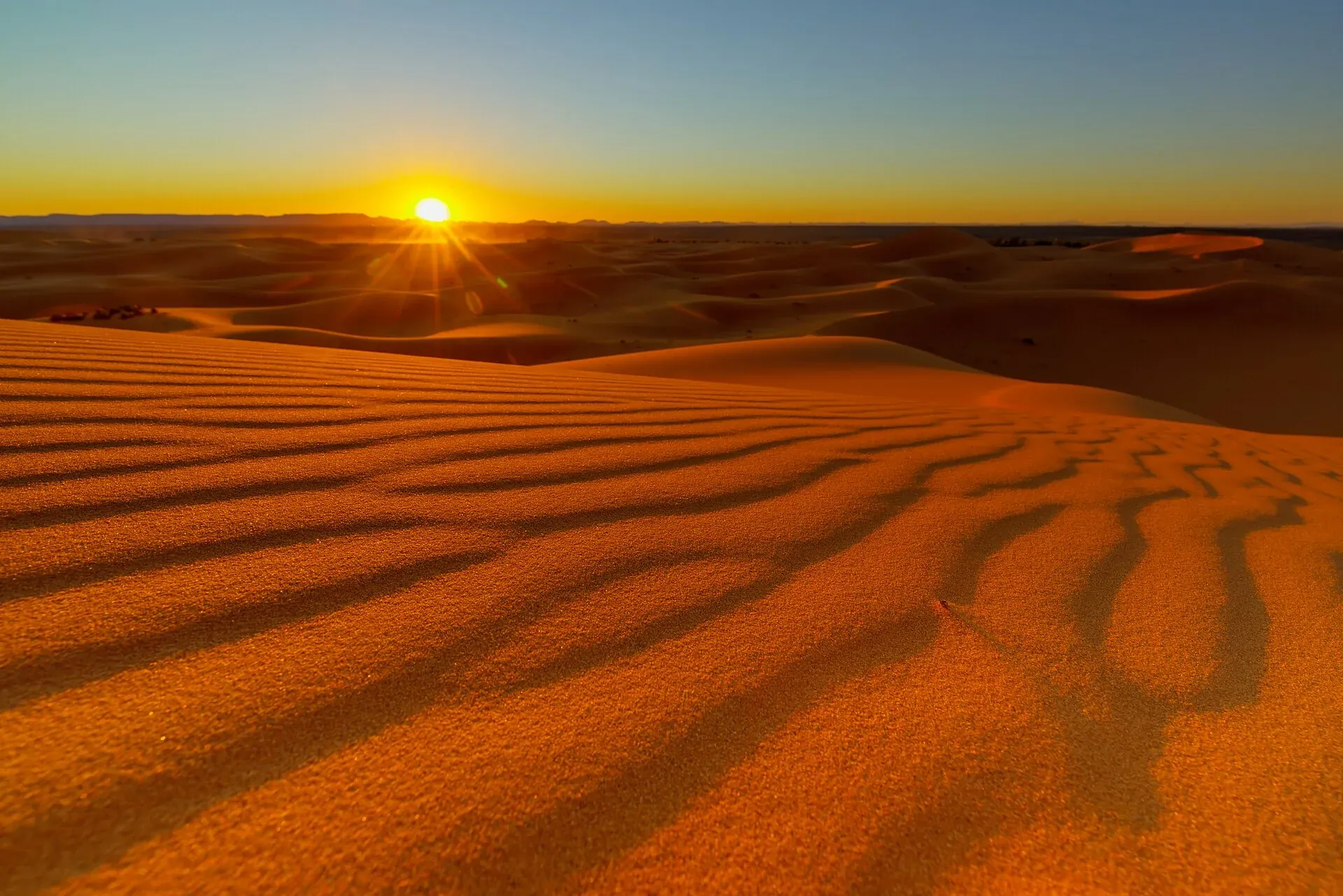
Sunset over the Erg Chebbi dunes Photo: Thomas Fuhrmann, CC BY-SA 4.0, via Wikimedia Commons (resized)
Honeymoon
A Morocco honeymoon with us is a fully private journey: your own driver-guide and vehicle, stays chosen for atmosphere, and the romantic parts booked before you land, from a couples' hammam to a private dune sunset with mint tea. Our signature ten-day honeymoon runs from a palace riad in Marrakech over the High Atlas to the Rose Valley, two nights at an exclusive-use camp at Erg Chigaga, and the coast at Essaouira.
Honeymoon: settings, planning and FAQs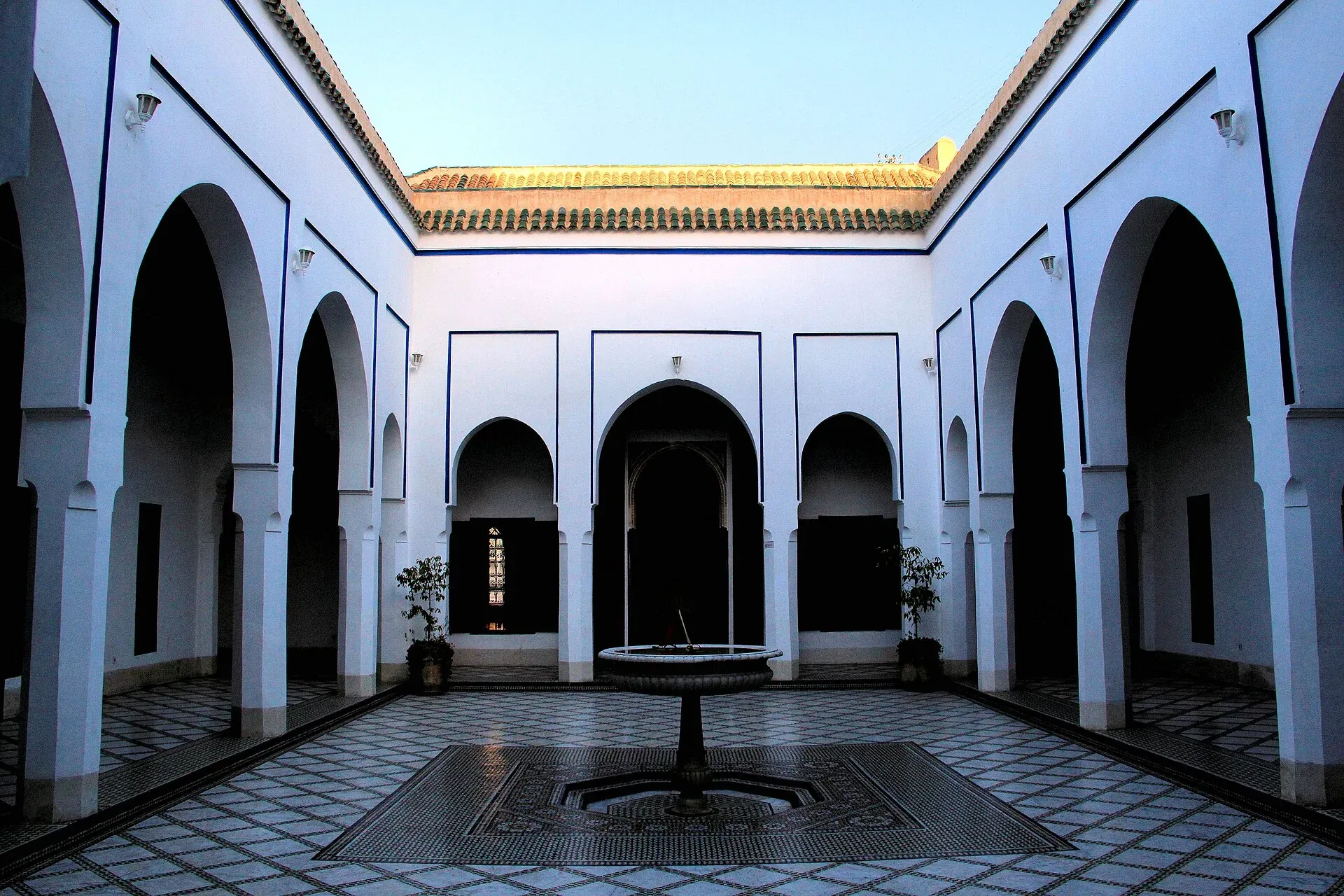
The front courtyard of the Bahia Palace, Marrakech Photo: Lionel Leo, CC BY-SA 3.0, via Wikimedia Commons (resized)
Destination wedding
A Morocco destination wedding is usually a celebration or a symbolic ceremony: most couples complete the legal marriage at home, then gather in Morocco for the day itself. The settings are a riad courtyard in Marrakech, a camp in the Sahara, a lodge in the High Atlas or the Atlantic at Essaouira.
Destination wedding: settings, planning and FAQs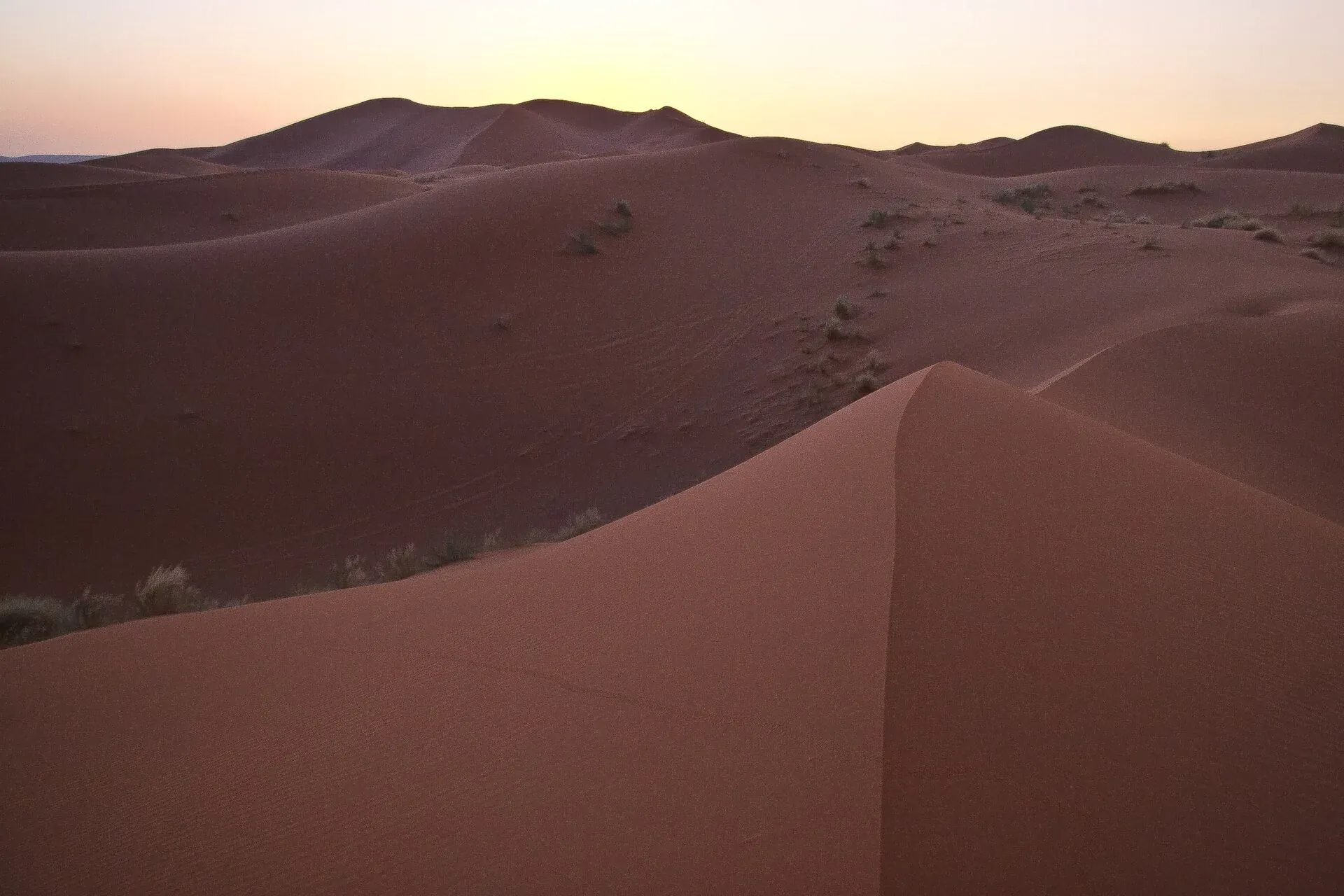
A dune ridge at dusk, Erg Chebbi Photo: Mike Prince, CC BY 2.0, via Wikimedia Commons (resized)
Elopement
An elopement in Morocco is a small symbolic ceremony or a private celebration, usually just the two of you and perhaps a photographer, with the legal marriage done at home before or after. The settings that suit it are a High Atlas terrace, a Sahara camp, a riad roof terrace in Marrakech or the coast at Essaouira.
Elopement: settings, planning and FAQs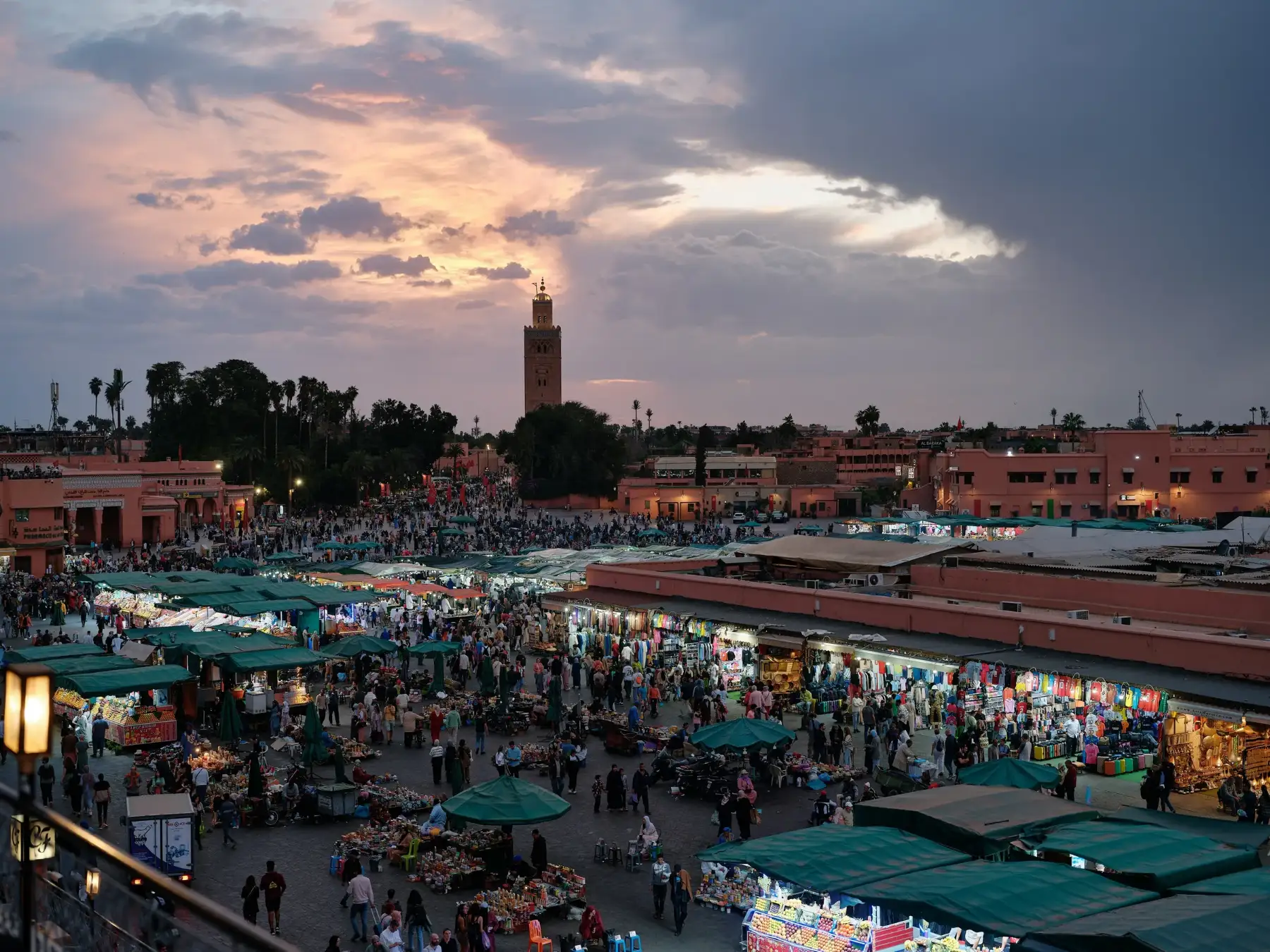
Sunset from a rooftop over Jemaa el-Fnaa, Marrakech Photo: Herokk, CC BY-SA 4.0, via Wikimedia Commons (resized)
Proposal
The places couples choose to propose in Morocco are a dune crest in the Sahara at sunset, a lantern-lit evening at a desert camp, a candlelit dinner in a Marrakech riad, and the ramparts at Essaouira. We plan a private trip around the moment: the driver-guide who gets you there on time, the camp or riad, and the dinner after.
Proposal: settings, planning and FAQsA dune ridge at dusk, Erg Chebbi Photo: Mike Prince, CC BY 2.0, via Wikimedia Commons (resized)
Vow renewal
A vow renewal in Morocco is a private, symbolic ceremony: it carries no legal weight, so there is nothing to register. Couples usually choose a dune crest in the Sahara at sunset, a riad courtyard in Marrakech or the coast at Essaouira, and fold the moment into a private trip.
Vow renewal: settings, planning and FAQs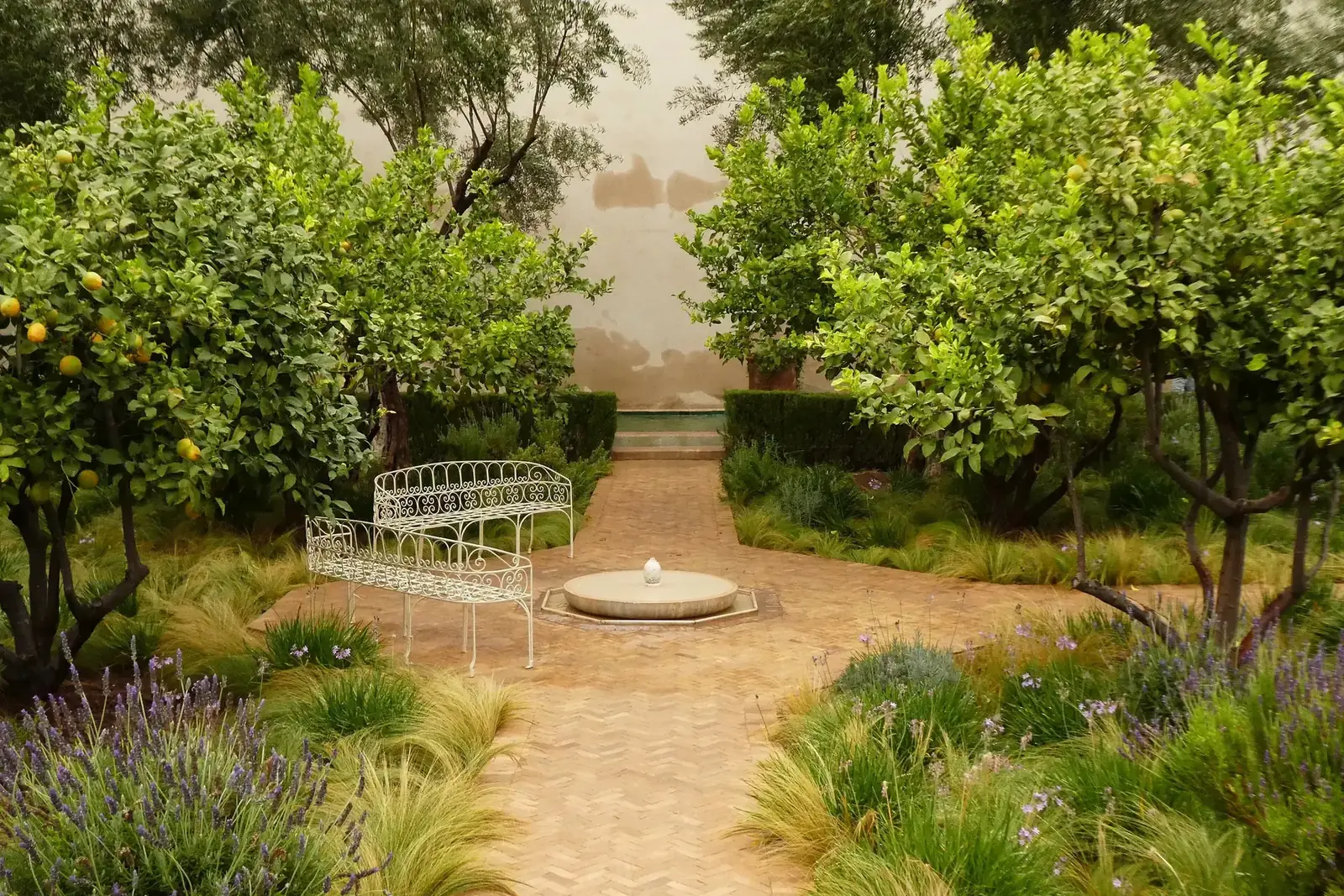
Le Jardin Secret, Marrakech Photo: muffinn, CC BY 2.0, via Wikimedia Commons (resized)
Anniversary trip
For an anniversary, most couples want Morocco at an slower pace: palace riads in Marrakech or Fes, a night or two at a desert camp, and an easy finish on the coast at Essaouira. Our Anniversary Grand Tour covers the whole country in fourteen private days; shorter routes do the same at a smaller scale.
Anniversary trip: settings, planning and FAQs
The legal marriage usually happens at home. The celebration happens here.
Whatever the occasion, we plan the trip and the event around it, and say plainly what our team does and what we book with local specialists. Nothing is promised until it is confirmed to you in writing.
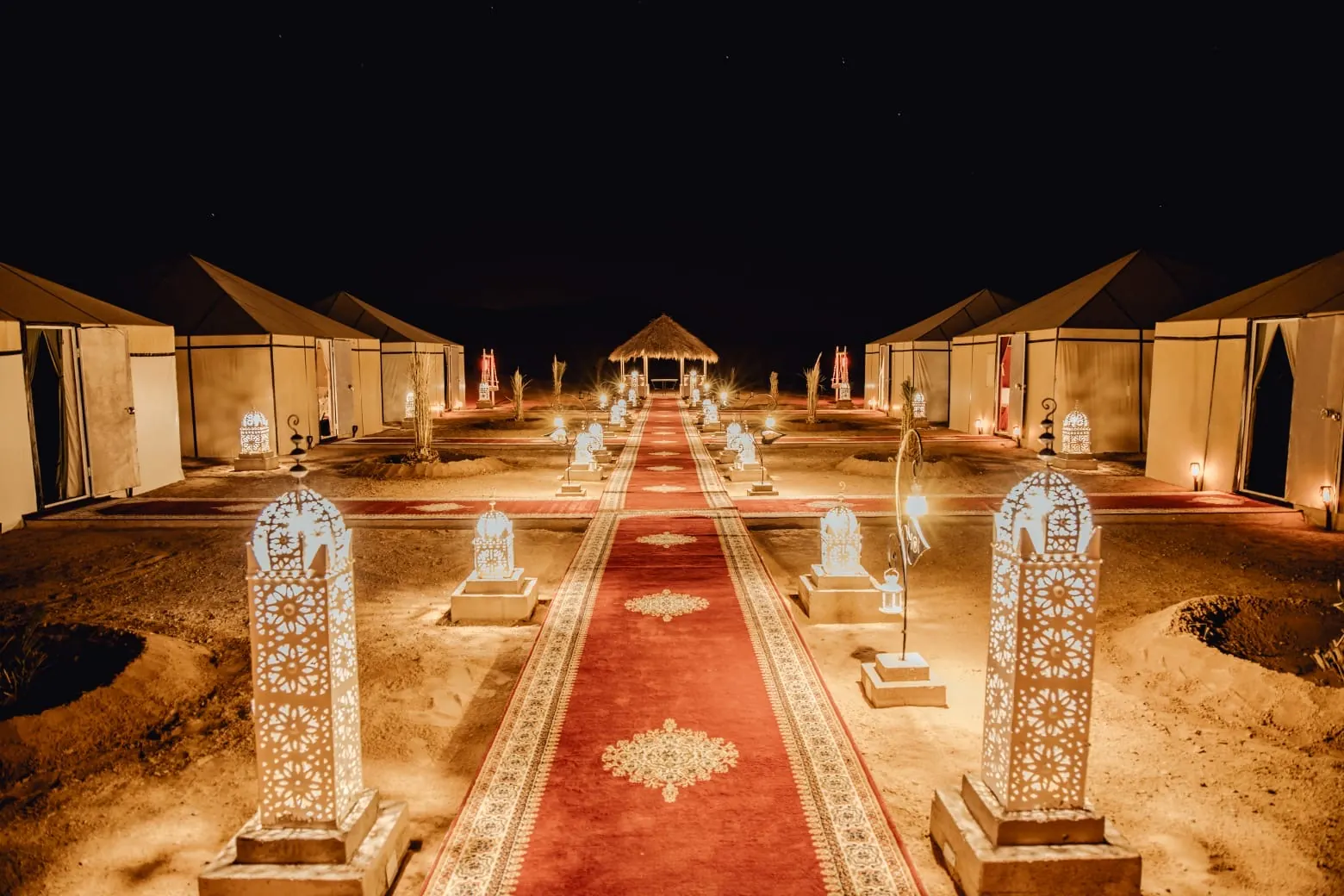
The lantern-lit walk between the tents of a camp near Merzouga, Erg Chebbi
In writing, before you book
What our team does, and what we book with local specialists
We arrange
- Your own driver-guide and private vehicle, with airport pickup and flight tracking
- Hand-picked riads, kasbahs and desert camps, booked for your dates
- A private dune-crest sunset with mint tea, on our desert journeys
- Candlelit dinners booked ahead and rose-petal turndowns
- A couples' hammam
- A photographer for a portrait session
- A cake or champagne, or a musician, for the evening
- A WhatsApp line to our concierge during your trip, Monday to Saturday, 09:00 to 18:00 GMT
With local specialists, in your quote
- A celebrant for a symbolic ceremony or a renewal
- Flowers, lighting and décor
- Musicians, a henna artist or a negaffa
We never
- Perform, register or witness a legal marriage
- Give legal, immigration or paperwork advice
- Promise a setting or a date until it is confirmed to you in writing
From first message to the day
How does planning work, step by step?
Tell us the occasion and your dates
Send a few lines from the enquiry form: the occasion, roughly when, how many of you, and the kind of setting you picture. A rough idea is enough.
We write back by email
A real person writes back with questions and a first outline: route, stays and where the moment could happen. No obligation and no deposit to get a quote.
We shape it with you
We adjust the route, the stays and the timing until it fits. For the event itself, such as flowers, music or a celebrant, your planner books local specialists and sets each one out in your written quote.
Confirmed in writing
Every stay, transfer and arrangement is confirmed in writing, with the price, before any deposit.
On the day
Your driver-guide is with you on the day, and our concierge answers WhatsApp Monday to Saturday, 09:00 to 18:00 GMT.
Straight answers
What do couples ask us first?
Can foreigners get married in Morocco?
We do not arrange legal marriages. Most international couples marry legally at home, at a registry office or civil ceremony, and hold the celebration or a symbolic ceremony in Morocco. A legally binding marriage of foreign nationals in Morocco has its own requirements, which vary by nationality and change over time, so check them with the Moroccan authorities and your own embassy or consulate before you plan.
Are you a wedding planner?
For the celebration, yes. We plan the trip and the event around it: driver-guides, vehicles, riads, kasbahs, desert camps, transfers and dinners, and the setting and the evening itself, with local specialists, such as florists and musicians, where the day needs them. Their part is set out in your written quote. The ceremony is symbolic: we are not a registry, and legal marriage is done at home.
What is the difference between an elopement and a destination wedding?
Size. An elopement is usually the two of you, perhaps with a photographer, and fits a dune crest or a mountain terrace. A destination wedding brings guests, which means rooms, transfers and a setting large enough for everyone, and a year or more of lead time.
When is the best season for a celebration in Morocco?
Spring (roughly March to May) and autumn (roughly October to November). Inland Marrakech and the desert are very hot from June to August, so a summer date suits the cooler Essaouira coast. Winter days in Marrakech are mild, but desert and Atlas nights are cold, so plan for heaters and blankets.
Morocco Honeymoons, private trips for two
Tell us the occasion. We will plan the trip around it.
Which occasion, roughly when, and how many of you. A real person on our team writes back by email.
Photographs: our own trip photos, except The great courtyard of the Bahia Palace, Marrakech by Val Traveler (CC BY-SA 4.0); Sunset over the Erg Chebbi dunes by Thomas Fuhrmann (CC BY-SA 4.0); The front courtyard of the Bahia Palace, Marrakech by Lionel Leo (CC BY-SA 3.0); A dune ridge at dusk, Erg Chebbi by Mike Prince (CC BY 2.0); Sunset from a rooftop over Jemaa el-Fnaa, Marrakech by Herokk (CC BY-SA 4.0); Le Jardin Secret, Marrakech by muffinn (CC BY 2.0), via Wikimedia Commons, resized.